2026 Tax Loss Harvesting: Offset $3,000 Ordinary Income Annually
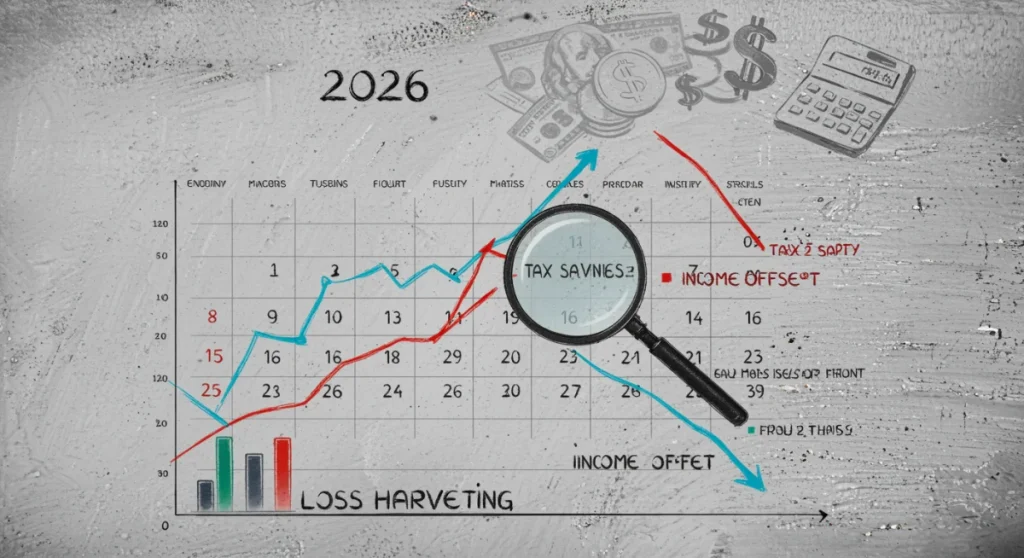
Leveraging 2026 Tax Loss Harvesting allows investors to strategically sell investments at a loss to offset capital gains and up to $3,000 of ordinary income annually, presenting a time-sensitive opportunity for significant tax savings.
As we approach 2026, understanding and implementing smart financial strategies becomes more critical than ever. One powerful, yet often underutilized, technique for investors is leveraging 2026 tax loss harvesting. This strategy allows you to turn investment losses into a tangible benefit, potentially offsetting up to $3,000 of your ordinary income each year and reducing your overall tax burden. It’s a time-sensitive opportunity that sophisticated investors should consider to optimize their financial outcomes.
Understanding the Fundamentals of Tax Loss Harvesting
Tax loss harvesting is a strategic financial maneuver that involves selling investments at a loss to offset capital gains and, to a limited extent, ordinary income. While the concept might seem straightforward, its effective application requires a clear understanding of the rules and potential benefits. It’s not just about selling losing stocks; it’s about optimizing your investment portfolio for tax efficiency.
The primary goal of tax loss harvesting is to reduce your taxable income. When you sell an investment for less than you paid for it, you realize a capital loss. The IRS allows you to use these losses to first offset any capital gains you have realized during the year. If your capital losses exceed your capital gains, you can then use up to $3,000 of the remaining loss to reduce your ordinary income, such as wages or interest income, each year. Any losses beyond this $3,000 limit can be carried forward indefinitely to future tax years.
The Wash-Sale Rule: A Critical Consideration
One of the most important rules to understand when engaging in tax loss harvesting is the wash-sale rule. This rule prevents investors from claiming a loss on the sale of a security if they purchase a substantially identical security within 30 days before or after the sale. Ignoring this rule can nullify your tax-saving efforts.
- Definition: A wash sale occurs if you sell or trade stock or securities at a loss and, within 30 days before or after the sale, you buy substantially identical stock or securities.
- Impact: If a wash sale occurs, the loss is disallowed, and instead, it’s added to the cost basis of the newly acquired shares.
- Avoiding it: To avoid a wash sale, you must wait at least 31 days to repurchase the same security or purchase a different, non-substantially identical security immediately.
Understanding these fundamental principles ensures that your tax loss harvesting efforts are compliant with IRS regulations and effectively contribute to your financial well-being. It’s a proactive approach to managing your investments that can yield significant tax benefits.
The $3,000 Ordinary Income Offset: A Key Benefit for 2026
The ability to offset up to $3,000 of ordinary income annually is a cornerstone of the tax loss harvesting strategy. This specific provision makes it incredibly attractive, especially for individuals with stable incomes who are looking for ways to reduce their taxable obligations. For 2026, this limit remains a powerful tool in your financial arsenal.
Consider a scenario where you have realized significant capital losses from your investment portfolio. After offsetting all your capital gains, you still have $5,000 in remaining losses. The IRS allows you to use $3,000 of this amount to reduce your ordinary income for the current tax year. This direct reduction in ordinary income can lead to immediate and tangible tax savings, lowering your overall tax bill.
How the $3,000 Limit Works in Practice
The $3,000 limit applies to the net capital loss after all capital gains have been offset. Any excess loss beyond this $3,000 can be carried forward to subsequent tax years. This carryforward provision is crucial because it means that even large losses can continue to provide tax benefits for years to come, offering a long-term advantage.
- Step 1: Calculate total capital gains and losses for the year.
- Step 2: Offset capital gains with capital losses.
- Step 3: If net capital loss remains, apply up to $3,000 to ordinary income.
- Step 4: Carry forward any remaining net capital loss to future years.
This systematic approach ensures that you maximize the benefits of your investment losses. It transforms a potentially negative investment outcome into a positive tax advantage, underscoring the importance of regularly reviewing your portfolio for harvesting opportunities, particularly as the end of the tax year approaches.
Strategic Timing: When to Execute Tax Loss Harvesting in 2026
The effectiveness of tax loss harvesting heavily relies on strategic timing. While the opportunity exists throughout the year, the period leading up to the end of the tax year (typically December 31st for most taxpayers) is often the most critical. Understanding market cycles and your personal financial situation is key to maximizing these benefits in 2026.
Monitoring your investment portfolio regularly allows you to identify potential losses as they occur. Rather than waiting until year-end, which can sometimes lead to rushed decisions or missed opportunities, a continuous review process can help you pinpoint optimal times to sell. Market downturns, for instance, often present prime opportunities for harvesting losses.
Year-End Planning and Beyond
As the year 2026 draws to a close, a thorough review of your portfolio becomes essential. This is when you can consolidate your gains and losses and make final adjustments to maximize your tax benefits. However, the strategy isn’t limited to just year-end; it’s an ongoing process that should be integrated into your overall investment management.
- Continuous Monitoring: Regularly check your portfolio for unrealized losses.
- Market Volatility: Utilize market dips to generate losses strategically.
- Year-End Review: Conduct a comprehensive portfolio analysis before December 31st to finalize harvesting decisions.
Effective timing ensures that you not only capture losses but also navigate the wash-sale rule successfully. This proactive approach to managing your investments throughout 2026 will help you make informed decisions that translate into meaningful tax savings.
Identifying Eligible Investments for Loss Harvesting
Not all investments are suitable for tax loss harvesting, and understanding which ones qualify is crucial for an effective strategy. Generally, publicly traded stocks, mutual funds, exchange-traded funds (ETFs), and bonds held in taxable brokerage accounts are eligible. Investments held in tax-advantaged accounts, such as 401(k)s or IRAs, do not qualify for this strategy.
The key is to identify investments that have declined in value since their purchase and where you believe the loss is worth realizing for tax purposes. This doesn’t mean selling off every losing asset; instead, it involves a careful assessment of the investment’s future potential and your overall portfolio strategy. Sometimes, holding onto a losing investment might be preferable if you anticipate a strong recovery.
Types of Securities and Accounts
Focus your attention on your taxable brokerage accounts, as these are where capital gains and losses are recognized for tax purposes. Within these accounts, a wide range of securities can be harvested for losses.
- Stocks: Individual equities that have decreased in value.
- Mutual Funds/ETFs: Funds that have experienced a decline.
- Bonds: Debt instruments sold below their purchase price.
It’s important to remember that the objective is not just to generate a loss, but to do so in a way that aligns with your long-term investment goals. Selling an investment solely for tax purposes without considering its fundamental value or your portfolio’s diversification could be counterproductive. Therefore, a balanced approach is always recommended when identifying eligible investments for loss harvesting.

Record Keeping and Reporting for 2026 Tax Loss Harvesting
Accurate record keeping is paramount for successfully implementing tax loss harvesting. The IRS requires detailed documentation of all investment transactions, especially those involving sales that generate capital gains or losses. Without proper records, you may find it challenging to substantiate your claims during tax season, potentially leading to complications.
Maintaining meticulous records not only ensures compliance but also helps you track your losses and carryforwards effectively. Brokerage statements, trade confirmations, and year-end tax statements (Form 1099-B) are essential documents that provide the necessary information for reporting your capital gains and losses on your tax return.
Essential Documents and Forms
When preparing your 2026 tax return, you will primarily use Schedule D (Capital Gains and Losses) and Form 8949 (Sales and Other Dispositions of Capital Assets) to report your transactions. These forms allow you to itemize your sales, calculate your gains and losses, and determine your net capital loss for the year.
- Form 1099-B: Provided by your broker, detailing all sales transactions.
- Form 8949: Used to report individual sales and calculate gains/losses.
- Schedule D: Summarizes capital gains and losses, including the $3,000 ordinary income offset and carryforwards.
Keeping organized records throughout the year simplifies the tax preparation process and reduces the likelihood of errors. It also provides a clear audit trail should the IRS ever question your reported losses. Therefore, treat record keeping as an integral part of your tax loss harvesting strategy for 2026.
Advanced Strategies and Professional Guidance for 2026
While the basics of tax loss harvesting are straightforward, advanced strategies can further optimize your benefits. These often involve considering the interplay of various investment vehicles, long-term versus short-term capital gains and losses, and future tax planning. Engaging with a qualified financial advisor or tax professional can provide invaluable guidance in these complex areas.
For instance, understanding how to strategically match short-term losses against short-term gains (taxed at ordinary income rates) and long-term losses against long-term gains (taxed at lower capital gains rates) can significantly impact your tax liability. A professional can help you navigate these nuances and develop a harvesting plan tailored to your specific financial situation and goals for 2026.
When to Seek Expert Advice
Complex portfolios, significant capital gains or losses, or changes in tax laws are all good reasons to consult with an expert. A financial advisor can help you assess your overall financial picture, ensure compliance with the latest tax regulations, and implement strategies that align with your broader investment objectives.
- Complex Portfolios: For diverse holdings or substantial assets.
- Significant Transactions: When large gains or losses are realized.
- Tax Law Changes: To stay updated on evolving regulations.
- Estate Planning: Integrating tax loss harvesting into broader financial plans.
Professional guidance can help you avoid common pitfalls, such as wash sales, and ensure that you fully leverage the potential of tax loss harvesting. Their expertise can transform a good strategy into an excellent one, maximizing your tax savings and contributing to your long-term financial success in 2026 and beyond.
| Key Aspect | Brief Description |
|---|---|
| Purpose | Sell investments at a loss to offset capital gains and reduce taxable income. |
| Ordinary Income Offset | Up to $3,000 of net capital loss can reduce ordinary income annually. |
| Wash-Sale Rule | Cannot repurchase substantially identical securities within 30 days before or after the sale. |
| Record Keeping | Maintain detailed records for IRS compliance (Form 1099-B, 8949, Schedule D). |
Frequently Asked Questions About 2026 Tax Loss Harvesting
Tax loss harvesting involves selling investments at a loss to offset capital gains and reduce taxable income. For 2026, you can use realized losses to first cancel out capital gains, then offset up to $3,000 of ordinary income annually. Any excess losses can be carried forward to future tax years, making it a powerful strategy.
After offsetting all capital gains, you can use up to $3,000 of your net capital losses to reduce your ordinary income, such as wages or interest. This $3,000 limit is a significant benefit, directly lowering your taxable income and potentially reducing your overall tax bill for 2026.
The wash-sale rule prohibits claiming a loss on a security if you buy a substantially identical one within 30 days before or after the sale. It’s crucial for 2026 tax planning because violating it disallows the loss, making your tax loss harvesting ineffective. Always ensure a 31-day waiting period or purchase a different security.
Generally, investments held in taxable brokerage accounts, such as individual stocks, mutual funds, ETFs, and bonds, are eligible. Assets in tax-advantaged accounts like 401(k)s or IRAs do not qualify. Focus on identifying securities that have experienced a decline in value in your taxable portfolio.
While you can perform basic tax loss harvesting yourself, professional guidance is highly recommended for complex portfolios or significant transactions. A financial advisor or tax professional can help you navigate intricate rules, optimize strategies, and ensure compliance with IRS regulations, maximizing your tax savings for 2026.
Conclusion
Leveraging 2026 tax loss harvesting stands out as a critical, time-sensitive strategy for investors seeking to optimize their financial position. By understanding the fundamentals, adhering to rules like the wash-sale provision, and meticulously tracking your transactions, you can effectively turn investment losses into significant tax advantages. The ability to offset up to $3,000 in ordinary income annually, coupled with the indefinite carryforward of excess losses, provides a powerful tool for reducing your tax burden. As you plan for 2026, consider incorporating this proactive strategy into your investment management, and don’t hesitate to seek professional advice to tailor it to your unique financial landscape, ensuring you maximize every potential benefit.