Private Student Loan Market 2026: Top Lenders & Hidden Fees Guide

Anúncios
Navigating the landscape of higher education finance can be daunting, especially when considering the role of private student loans. As we look towards 2026, the private student loan market continues to evolve, presenting both opportunities and challenges for students seeking to fund their academic pursuits. Understanding this market, identifying reputable lenders, and, crucially, avoiding hidden fees are paramount to making informed financial decisions that will impact your future for years to come.
Anúncios
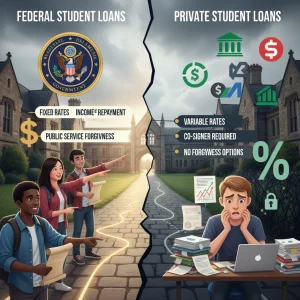
Federal student loans often serve as the first line of defense for many students due to their borrower-friendly terms, such as fixed interest rates, income-driven repayment plans, and potential for forgiveness. However, federal aid often has limits, and for many, the cost of tuition, housing, books, and living expenses exceeds what federal programs can cover. This is where private student loans step in, offered by banks, credit unions, and state-affiliated organizations. While they can bridge the funding gap, they typically come with different terms, interest rates, and eligibility requirements, making careful consideration essential.
The decision to take on private student loans should never be taken lightly. It requires thorough research, a clear understanding of your financial situation, and a keen eye for detail to spot potential pitfalls. This comprehensive guide aims to equip you with the knowledge needed to confidently navigate the 2026 private student loan market. We will delve into the current state of the market, analyze three top lenders, discuss the critical factors to consider when choosing a loan, and, most importantly, provide actionable strategies to identify and avoid those pesky hidden fees that can significantly increase the overall cost of your education.
Anúncios
Understanding the 2026 Private Student Loan Market
The private student loan market is dynamic, influenced by economic conditions, regulatory changes, and the competitive landscape among lenders. As we approach 2026, several trends are shaping how private student loans are offered and accessed.
Interest Rate Environment
Interest rates are a primary concern for any borrower. Private student loans typically offer both fixed and variable interest rates. Fixed rates remain constant throughout the life of the loan, providing predictability in monthly payments. Variable rates, on the other hand, can fluctuate based on market indices like the SOFR (Secured Overnight Financing Rate) or Prime Rate. While variable rates might start lower, they carry the risk of increasing over time, potentially leading to higher overall costs. The economic outlook for 2026 will heavily influence these rates. If inflation remains a concern, central banks might continue with tighter monetary policies, leading to higher benchmark rates, which in turn would affect variable private student loan rates and potentially push fixed rates upward.
Creditworthiness and Co-signers
Unlike federal loans, eligibility for private student loans is heavily dependent on the borrower’s creditworthiness. Lenders assess credit scores, income, and debt-to-income ratios. Many students, especially those just starting college, may not have a sufficient credit history or income to qualify on their own. This often necessitates a co-signer – typically a parent or guardian with a strong credit profile – who shares equal responsibility for the loan. The presence of a co-signer can significantly improve the chances of approval and secure more favorable interest rates. Lenders are increasingly offering co-signer release options, allowing borrowers to remove their co-signer after a certain period of on-time payments, a feature worth looking for.
Lender Competition and Product Innovation
The competitive nature of the private student loan market means lenders are constantly innovating. This can manifest in various ways: more flexible repayment options, lower origination fees (or none at all), faster application processes, and even rewards programs. Some lenders are also focusing on niche markets, such as loans for specific degree programs or for students pursuing certain career paths. Keeping an eye on these innovations can help you find a loan that best fits your unique circumstances.
Regulatory Landscape
While federal student loans are subject to extensive federal regulations, private student loans fall under a different regulatory framework, often governed by state laws and consumer protection agencies. Changes in these regulations can impact everything from disclosure requirements to collection practices. Staying informed about any significant regulatory shifts can provide additional layers of protection and understanding of your rights as a borrower.
Analyzing Top Private Student Loan Lenders for 2026
Choosing a lender for your private student loans is a critical decision. While many institutions offer these loans, a few consistently stand out for their competitive rates, customer service, and range of options. Here, we’ll analyze three prominent lenders that are expected to remain key players in the 2026 market. It’s important to remember that rates and terms can vary based on individual creditworthiness and market conditions.
1. Sallie Mae
Sallie Mae has long been a dominant force in the student loan industry. They offer a wide array of loan products, including undergraduate, graduate, MBA, medical school, and law school loans, as well as loans for bar study and residency. Sallie Mae is known for:
- Loan Variety: Their extensive range of loan types caters to almost every educational pursuit.
- Repayment Options: They typically offer multiple in-school repayment options, such as deferred payments, interest-only payments, or fixed monthly payments.
- Co-signer Release: Sallie Mae generally provides a co-signer release option after 12 consecutive on-time principal and interest payments.
- Potential Drawbacks: While competitive, their interest rates might not always be the lowest for every borrower, and some borrowers report a less personalized customer service experience compared to smaller lenders.
When considering Sallie Mae for private student loans, it’s crucial to compare their offered rates and terms directly with other lenders based on your specific credit profile.
2. Discover Student Loans
Discover is another major player, recognized for its transparent approach and customer-friendly features. Discover Student Loans are often praised for:
- No Fees: Discover prides itself on not charging origination fees, application fees, or late payment fees, which can be a significant cost-saver.
- Cash Rewards: They sometimes offer cash rewards for good academic performance, which can be an attractive perk.
- Customer Service: Discover generally receives high marks for its U.S.-based customer service.
- Repayment Flexibility: Similar to Sallie Mae, they offer various in-school repayment options.
- Potential Drawbacks: While they offer competitive rates, eligibility requirements can be stringent, and not all students may qualify for their lowest advertised rates.
For those seeking straightforward terms and no hidden fees, Discover’s private student loans can be a very appealing option, provided you meet their credit criteria.
3. College Ave Student Loans
College Ave has quickly gained popularity for its highly customizable loan options and user-friendly online experience. Their key features include:
- Customization: College Ave allows borrowers to choose from a wide range of repayment terms (e.g., 5, 8, 10, 15 years) and in-school repayment options, making it easier to tailor a loan to individual needs.
- Competitive Rates: They often offer very competitive fixed and variable interest rates, especially for borrowers with strong credit.
- Application Process: Their online application is known for being quick and intuitive, providing instant pre-qualification without impacting your credit score.
- No Fees: Like Discover, College Ave typically does not charge application or origination fees.
- Potential Drawbacks: While highly customizable, their interest rates can vary significantly based on credit scores, and some borrowers might find their customer service less extensive than larger, more established institutions.
College Ave is an excellent choice for borrowers who appreciate flexibility and want to fine-tune their private student loans to match their financial plan.
Recommendation: When comparing these or any other lenders for private student loans, always get personalized rate quotes. Most lenders offer a pre-qualification process that allows you to see your potential rates without a hard credit inquiry. This is the most accurate way to compare offers.
Strategies to Avoid Hidden Fees in Private Student Loans
Hidden fees can significantly inflate the total cost of your private student loans, turning what seemed like an attractive interest rate into a more expensive borrowing experience. Being vigilant and informed is your best defense. Here are key strategies to identify and avoid these often-overlooked charges.
1. Scrutinize the Loan Agreement (The Fine Print is Your Friend)
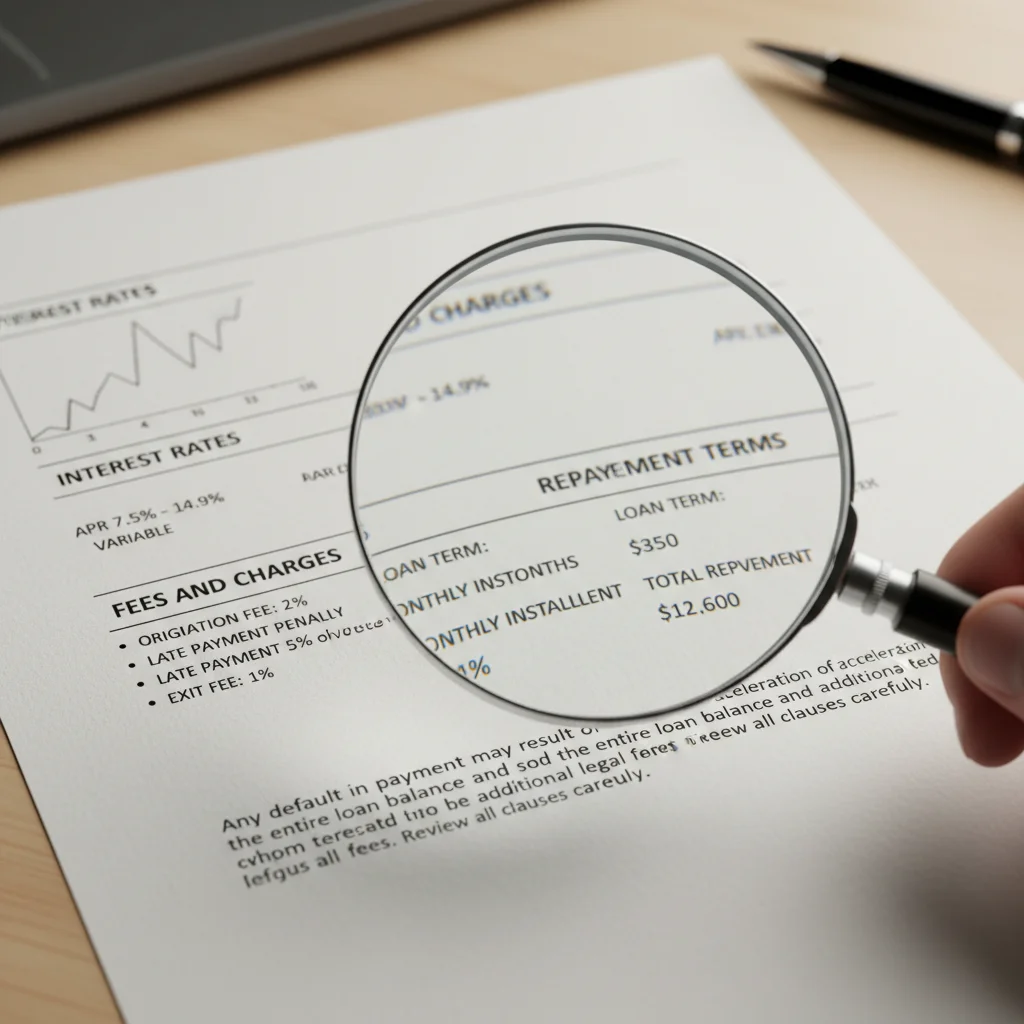
This is perhaps the most crucial step. Before signing any loan agreement for private student loans, read every single line, no matter how small the font. Look for sections detailing fees. If anything is unclear, ask the lender for clarification. Do not assume anything. Key areas to focus on include:
- Origination Fees: This is a fee charged by the lender for processing the loan. It’s often a percentage of the total loan amount (e.g., 1% to 5%) and can be deducted from the loan principal before disbursement or added to the loan amount. Many reputable lenders, like Discover and College Ave, have moved away from these fees, but they still exist.
- Disbursement Fees: Less common, but some lenders might charge a fee to disburse the funds to your school.
- Late Payment Fees: Understand the grace period and the penalty for missed or late payments. These can be flat fees or a percentage of the overdue amount.
- Returned Payment Fees: If a payment is returned due to insufficient funds, you might incur a fee.
- Prepayment Penalties: While rare for student loans, some loans might charge a fee if you pay off your loan early. Ensure your loan agreement explicitly states there are no such penalties.
2. Compare the Annual Percentage Rate (APR), Not Just the Interest Rate
The interest rate is what you pay on the principal. The Annual Percentage Rate (APR) is a more comprehensive measure of the cost of borrowing because it includes the interest rate plus certain fees (like origination fees) expressed as a yearly rate. When comparing offers for private student loans, always use the APR to get a true apples-to-apples comparison. A loan with a slightly lower interest rate but a high origination fee might end up having a higher APR than a loan with a slightly higher interest rate but no fees.
3. Ask Direct Questions About All Potential Fees
Don’t be shy. When speaking with a lender’s representative, explicitly ask: “What are all the fees associated with this loan, both upfront and throughout the repayment period?” Make a list and compare it across different lenders. Ask about fees for:
- Application
- Origination
- Disbursement
- Late payments
- Returned payments
- Prepayment
- Any other administrative fees
A transparent lender should be able to provide a clear, comprehensive list.
4. Beware of Optional Services and Add-ons
Sometimes, lenders or third-party servicers might offer “optional” services, such as credit protection plans or loan insurance, that come with additional costs. While some might be beneficial in specific circumstances, many are unnecessary and simply add to your debt. Understand exactly what you’re paying for and whether it genuinely provides value before agreeing to any add-ons with your private student loans.
5. Understand the Repayment Terms and Potential for Fees
Familiarize yourself with the repayment schedule and what happens if you face financial hardship. Some lenders might charge fees for deferment or forbearance requests, though this is less common for standard hardship programs. Knowing these terms upfront can help you avoid unexpected costs if your financial situation changes.
6. Read Reviews and Check with Consumer Protection Agencies
Before committing to a lender for private student loans, look for reviews from other borrowers. Websites like the Better Business Bureau (BBB) or the Consumer Financial Protection Bureau (CFPB) can provide insights into common complaints, including issues related to undisclosed fees or poor customer service. While not every negative review is indicative of a bad lender, patterns of complaints about hidden fees should be a red flag.
Maximizing Your Private Student Loan Experience
Beyond avoiding fees, there are several ways to ensure your experience with private student loans is as beneficial and manageable as possible.
Build Good Credit Before Applying
A strong credit score is your best asset when applying for private student loans. Lenders offer their best rates to borrowers deemed least risky. If you have limited credit history, consider getting a secured credit card or becoming an authorized user on a parent’s credit card to build a positive history. Even a few points can make a difference in your interest rate, potentially saving you thousands over the life of the loan.
Consider a Co-signer Wisely
If you need a co-signer to qualify or to get a better rate, ensure both you and your co-signer understand the responsibilities. They are equally liable for the debt. Look for lenders that offer co-signer release options, which can free your co-signer from responsibility after you’ve demonstrated a period of responsible payments.
Only Borrow What You Need
It’s tempting to borrow the maximum amount offered, but every dollar borrowed accrues interest. Create a detailed budget for your education and living expenses and only take out the amount of private student loans you genuinely need to cover the gap after exhausting scholarships, grants, and federal loans.
Understand Your Repayment Options
Before you even take out the loan, understand the repayment options available, both during school and after graduation. Some lenders offer interest-only payments while in school, which can reduce the total interest paid compared to full deferment. After graduation, know what options are available if you face financial hardship, such as forbearance or deferment, and the conditions for these.
Set Up Automatic Payments
Many lenders offer a small interest rate discount (e.g., 0.25%) for setting up automatic payments. This not only saves you a little money but also helps ensure you never miss a payment, protecting your credit score and avoiding late fees.

Conclusion: Making Smart Choices with Private Student Loans
The 2026 private student loan market will continue to be a vital resource for many students pursuing higher education. While private student loans can effectively bridge funding gaps, they demand a proactive and informed approach. By understanding the market trends, carefully evaluating top lenders like Sallie Mae, Discover, and College Ave, and diligently scrutinizing loan agreements for hidden fees, you can navigate this complex financial landscape with confidence.
Remember that the lowest advertised interest rate isn’t always the cheapest option once all fees are factored in. Always compare APRs, ask direct questions about every potential charge, and read all documentation thoroughly. Your diligence today in understanding the nuances of private student loans will pay dividends in financial peace of mind throughout your academic journey and well into your professional life. Equipping yourself with this knowledge is the first and most important step towards a financially secure future.