Cybersecurity for Small Businesses: 4 Essential Protections Against 2026 Threats (PRACTICAL SOLUTIONS)

Anúncios
Cybersecurity for Small Businesses: 4 Essential Protections Against 2026 Threats (PRACTICAL SOLUTIONS)
In an increasingly digital world, the threat landscape for businesses is constantly evolving. While large corporations often have dedicated cybersecurity teams and vast budgets, small businesses frequently find themselves vulnerable, becoming prime targets for cybercriminals. The year 2026 is rapidly approaching, and with it, new and sophisticated threats that demand proactive and robust defense strategies. This comprehensive guide will equip your small business with the four essential protections needed to navigate the challenges of modern cybersecurity, offering practical, actionable solutions to safeguard your invaluable data and ensure operational continuity. Understanding and implementing these measures is not just about compliance; it’s about survival and thriving in a digitally interconnected economy.
Anúncios
The perception that cyberattacks only target large enterprises is a dangerous myth. In reality, small businesses are often seen as easier targets due to perceived weaker security postures and fewer resources dedicated to defense. A single data breach can be catastrophic, leading to financial losses, reputational damage, legal penalties, and even business closure. Therefore, prioritizing small business cybersecurity is no longer optional; it’s a critical investment in your company’s future. Let’s delve into the core strategies that will fortify your defenses against the threats of 2026 and beyond.
Anúncios
1. Fortify Your Human Firewall: Comprehensive Employee Training and Awareness
Your employees are often your first line of defense, but without proper training, they can also be your weakest link. Human error remains a leading cause of security breaches. Phishing, social engineering, and ransomware attacks frequently exploit lack of awareness rather than technical vulnerabilities. For effective small business cybersecurity, investing in continuous employee training is paramount.
The Evolving Threat of Social Engineering and Phishing
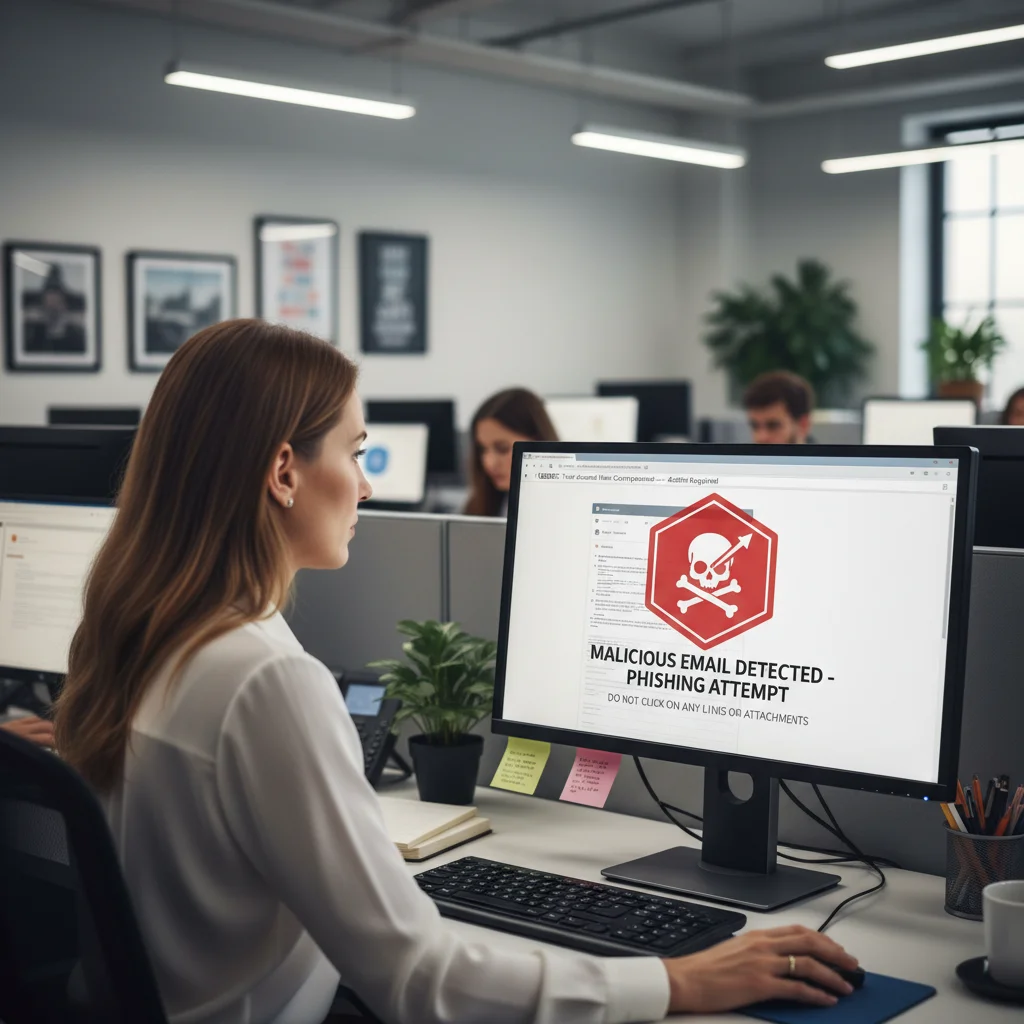
Cybercriminals are becoming increasingly sophisticated in their social engineering tactics. Phishing emails are more convincing, spear-phishing targets specific individuals, and ‘smishing’ (SMS phishing) and ‘vishing’ (voice phishing) are on the rise. Employees need to be able to identify these threats, understand their implications, and know how to report them. Regular simulated phishing attacks can help reinforce training and identify areas for improvement.
Practical Solutions for Employee Training:
- Regular, Interactive Training Sessions: Don’t just provide annual training; conduct quarterly or bi-annual sessions that are engaging and interactive. Use real-world examples relevant to your business.
- Phishing Simulations: Implement a system for sending simulated phishing emails to employees. Track who clicks on malicious links and provide immediate, targeted retraining.
- Strong Password Practices: Educate employees on the importance of strong, unique passwords for every account. Encourage the use of password managers and multi-factor authentication (MFA) everywhere possible.
- Recognizing Suspicious Activity: Train staff to recognize unusual requests, unexpected emails, and suspicious attachments. Emphasize the ‘stop, think, and verify’ approach.
- Clean Desk Policy: Encourage a clean desk policy to protect sensitive information from physical access.
- Data Handling Protocols: Ensure employees understand policies for handling sensitive customer and company data, including secure storage, transmission, and disposal.
- Reporting Procedures: Establish clear, easy-to-follow procedures for reporting any suspected security incidents. This empowers employees to act quickly without fear of reprisal.
By transforming your employees into a vigilant human firewall, you significantly reduce the risk of successful cyberattacks, making your small business cybersecurity far more resilient. This proactive approach cultivates a culture of security awareness that permeates every level of your organization.
2. Implement Robust Access Controls and Multi-Factor Authentication (MFA)
Unauthorized access is a gateway for data breaches. Whether it’s an external attacker or an insider threat, controlling who can access what resources is fundamental to strong small business cybersecurity. Implementing robust access controls combined with Multi-Factor Authentication (MFA) creates significant barriers for unauthorized users.
The Principle of Least Privilege
The principle of least privilege dictates that users should only be granted the minimum level of access necessary to perform their job functions. This limits the potential damage if an account is compromised. For example, a marketing employee doesn’t need access to financial records, and a temporary contractor shouldn’t have administrative privileges to core systems.
The Imperative of Multi-Factor Authentication (MFA)
Passwords alone are no longer sufficient. Brute-force attacks, credential stuffing, and phishing can easily compromise weak or reused passwords. MFA adds an extra layer of security by requiring users to provide two or more verification factors to gain access to an account. This could be something they know (password), something they have (phone, hardware token), or something they are (fingerprint, facial recognition).
Practical Solutions for Access Control and MFA:
- Identity and Access Management (IAM) System: Consider implementing an IAM solution. These systems centralize user identities and their access permissions, making it easier to manage and enforce policies across various applications and services.
- Role-Based Access Control (RBAC): Define roles within your organization (e.g., Administrator, Editor, Viewer) and assign specific permissions to each role. Then, assign users to appropriate roles. This simplifies management and ensures consistency.
- Strong Password Policies: Enforce policies requiring complex passwords, regular changes (though some experts now recommend longer, unique passphrases over frequent changes), and disallowing password reuse.
- Mandatory MFA: Implement MFA across all critical systems, including email, cloud services (CRM, ERP, accounting software), VPNs, and internal network access. Even for less critical systems, MFA should be strongly encouraged.
- Regular Access Reviews: Periodically review user access rights, especially when employees change roles or leave the company. Promptly revoke access for departed employees.
- Vendor and Third-Party Access: Extend access control principles to third-party vendors and contractors. Grant them temporary, limited access only for the duration of their work.
- Device Management: Implement policies for managing devices that access company data, including requiring strong passwords/biometrics and encryption on all company-issued and approved personal devices.
By rigorously controlling who can access what and bolstering login procedures with MFA, your small business cybersecurity posture will be significantly strengthened, making it much harder for unauthorized entities to penetrate your digital infrastructure.
3. Regular Data Backup and Disaster Recovery Planning
Even with the best preventative measures, a cyberattack, system failure, or natural disaster can still occur. When the worst happens, having a robust data backup and disaster recovery plan is the ultimate safety net. Without it, your business could face irreversible data loss and prolonged downtime, severely impacting operations and profitability. This is a non-negotiable aspect of effective small business cybersecurity.
The Importance of a Comprehensive Backup Strategy
A comprehensive backup strategy involves more than just copying files. It includes identifying critical data, determining backup frequency, choosing appropriate storage locations, and regularly testing the recovery process. Ransomware, in particular, makes backups absolutely essential, as encrypted data can only be restored if a clean copy exists.
Developing a Disaster Recovery Plan (DRP)
A Disaster Recovery Plan (DRP) outlines the procedures for restoring IT operations after a disruptive event. It goes beyond just data recovery to include restoring systems, applications, and network connectivity. A well-defined DRP minimizes downtime and ensures business continuity.
Practical Solutions for Data Backup and Disaster Recovery:
- Identify Critical Data: Categorize your data based on its importance and sensitivity. Prioritize what needs to be backed up most frequently and securely.
- 3-2-1 Backup Rule: Adopt the 3-2-1 rule: Keep at least three copies of your data, store them on two different types of media, and keep one copy offsite. This provides redundancy and protection against various failure scenarios.
- Automated Backups: Implement automated backup solutions to ensure consistency and reduce human error. Choose solutions that offer incremental backups to save storage space and time.
- Cloud Backups: Utilize reputable cloud backup services for offsite storage. These services often offer encryption, versioning, and easy recovery options.
- Test Backups Regularly: Don’t assume your backups are working until you’ve tested them. Regularly perform full data recovery tests to ensure data integrity and the effectiveness of your recovery procedures.
- Document Your DRP: Create a clear, concise, and accessible Disaster Recovery Plan. It should include contact information for key personnel, step-by-step recovery procedures, and an inventory of hardware and software.
- Train Staff on DRP: Ensure relevant staff members are familiar with the DRP and their roles in a recovery scenario. Conduct tabletop exercises to simulate disaster scenarios.
- Business Continuity Planning (BCP): While DRP focuses on IT, consider a broader Business Continuity Plan (BCP) that outlines how your business will continue essential operations during and after a disruption, even if IT systems are partially or fully down.
By implementing a robust backup strategy and a comprehensive DRP, your small business cybersecurity framework gains an essential layer of resilience, ensuring that even in the face of a significant incident, your business can recover and continue operating.
4. Proactive Network Security and Endpoint Protection
The perimeter of your network is under constant assault. From malware and viruses to sophisticated intrusion attempts, your network infrastructure and individual endpoints (computers, laptops, servers, mobile devices) require continuous vigilance and protection. Proactive network security and comprehensive endpoint protection are cornerstones of effective small business cybersecurity.
Understanding Network Vulnerabilities
Your network is a complex ecosystem. Every device connected, every port open, and every software application can be a potential vulnerability. Cybercriminals actively scan for weaknesses to exploit, which is why a multi-layered approach to network security is crucial.
The Importance of Endpoint Protection
Endpoints are often the entry point for attacks. An employee clicking a malicious link, inserting an infected USB drive, or connecting to an unsecured Wi-Fi network can compromise an entire system. Robust endpoint protection acts as a last line of defense at the device level.
Practical Solutions for Network Security and Endpoint Protection:
- Next-Generation Firewall (NGFW): Deploy a firewall that not only blocks unauthorized access but also inspects traffic for malicious content, performs intrusion prevention, and provides application control.
- Antivirus/Anti-Malware Software: Install and keep up-to-date reputable antivirus and anti-malware software on all endpoints and servers. Ensure it includes real-time protection.
- Endpoint Detection and Response (EDR): For more advanced protection, consider EDR solutions. These tools go beyond traditional antivirus by continuously monitoring endpoints for suspicious activity, detecting and investigating threats, and enabling rapid response.
- Patch Management: Establish a rigorous patch management program. Regularly update all operating systems, applications, and firmware to patch known vulnerabilities that attackers frequently exploit.
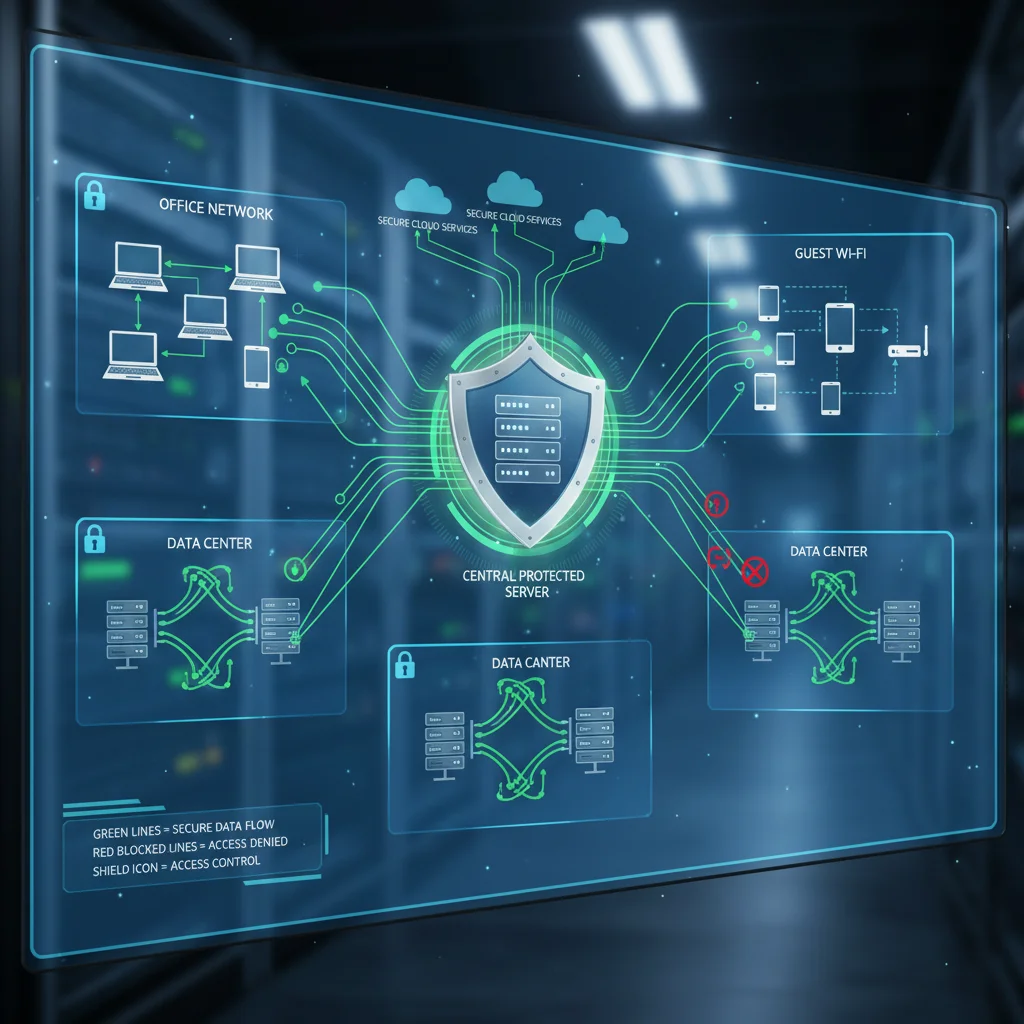
- Network Segmentation: Segment your network to isolate critical systems and sensitive data. If one segment is compromised, the breach is contained, preventing lateral movement of attackers.
- Intrusion Detection/Prevention Systems (IDS/IPS): These systems monitor network traffic for suspicious patterns and can automatically block or alert on detected threats.
- Secure Wi-Fi Networks: Use strong encryption (WPA3 preferred, WPA2 at minimum) for your Wi-Fi networks. Create separate Wi-Fi networks for guests, isolating them from your internal business network.
- VPN for Remote Access: Require employees to use a Virtual Private Network (VPN) for secure remote access to your business network.
- Regular Vulnerability Scanning: Conduct regular vulnerability scans of your network and systems to identify potential weaknesses before attackers do. Consider professional penetration testing periodically.
- Email Security Gateway: Implement an email security solution that filters spam, malware, and phishing attempts before they reach employee inboxes.
By proactively securing your network and protecting every endpoint, you significantly reduce the attack surface for cybercriminals, making your small business cybersecurity robust and resilient against a wide array of digital threats.
Integrating These Protections for a Holistic Cybersecurity Strategy
While each of these four protections is crucial on its own, their true power lies in their integration. A holistic approach to small business cybersecurity means recognizing that these elements are interconnected and mutually reinforcing. For example, employee training helps prevent phishing, which in turn reduces the chances of malware getting onto an endpoint, and if it does, robust network security can help contain it. If all else fails, a solid backup and recovery plan ensures business continuity.
The Role of Managed Security Service Providers (MSSPs)
For many small businesses, managing all these cybersecurity aspects in-house can be overwhelming and resource-intensive. This is where a Managed Security Service Provider (MSSP) can be invaluable. MSSPs offer expertise, tools, and 24/7 monitoring that small businesses typically cannot afford or maintain on their own. They can help with everything from implementing firewalls and EDR to conducting employee training and managing incident response.
Continuous Monitoring and Adaptation
Cybersecurity is not a one-time setup; it’s an ongoing process. Threats evolve, new vulnerabilities emerge, and your business operations change. Therefore, continuous monitoring of your systems, regular review of your security policies, and adaptation to the latest threat intelligence are essential. Stay informed about emerging threats specific to your industry and adjust your defenses accordingly.
Cyber Insurance: An Additional Layer of Protection
While not a substitute for strong security, cyber insurance can provide a financial safety net in the event of a breach. It can cover costs associated with data recovery, legal fees, public relations, regulatory fines, and business interruption. Consider it as a complementary component to your overall small business cybersecurity strategy.
Conclusion: Securing Your Small Business Future
The digital landscape of 2026 presents both immense opportunities and significant risks for small businesses. By focusing on these four essential pillars of protection – comprehensive employee training, robust access controls with MFA, diligent data backup and disaster recovery, and proactive network and endpoint security – you can build a formidable defense against a wide array of cyber threats. Investing in small business cybersecurity is not an expense; it’s a strategic investment in the longevity, reputation, and profitability of your enterprise. Take action today to protect your business and secure its future in the digital age.