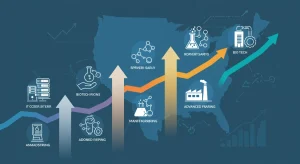
Future-Proof Your Career: 7 Digital Skills Dominating US Workforce by 2026

Anúncios
To thrive in the evolving US job market by 2026, individuals must prioritize acquiring critical digital skills like artificial intelligence, data analytics, and cybersecurity, which are poised to redefine professional landscapes.
Anúncios
The landscape of the US workforce is undergoing a profound transformation, driven by rapid technological advancements. To remain competitive and ensure long-term career viability, understanding and acquiring the right digital skills 2026 will be paramount. This article delves into the seven most in-demand digital competencies projected to dominate the job market by 2026, offering a roadmap for professionals seeking to future-proof their careers in an increasingly digital world.
Anúncios
The Rise of Artificial Intelligence and Machine Learning
Artificial Intelligence (AI) and Machine Learning (ML) are no longer futuristic concepts; they are foundational technologies reshaping industries from healthcare to finance. By 2026, proficiency in these areas will be crucial for innovation and operational efficiency across virtually all sectors. Professionals capable of developing, implementing, and managing AI/ML solutions will be highly sought after.
The impact of AI and ML extends beyond technical roles; even non-technical professionals will benefit from understanding how these technologies can automate tasks, analyze data, and drive strategic decisions. This shift necessitates a broader understanding of AI ethics, deployment, and practical application.
Understanding AI Fundamentals
- Core Concepts: Grasping the basics of AI, including neural networks, deep learning, and natural language processing.
- Algorithm Application: Learning how to select and apply appropriate algorithms for specific business problems.
- Tool Proficiency: Familiarity with popular AI/ML frameworks such as TensorFlow, PyTorch, and scikit-learn.
Developing expertise in AI and ML involves not only technical coding skills but also a keen analytical mind to interpret results and make informed decisions. This blend of technical and analytical prowess will define successful professionals in the coming years. The demand for AI specialists is projected to grow exponentially, making it a critical area for career investment.
Data Science and Analytics: Unlocking Insights
In an age where data is often referred to as the new oil, the ability to collect, process, and interpret vast amounts of information is invaluable. Data science and analytics skills are essential for businesses to make data-driven decisions, understand customer behavior, and identify emerging trends. By 2026, nearly every industry will rely heavily on data professionals to extract actionable insights.
This field encompasses a wide range of disciplines, from statistical analysis and predictive modeling to data visualization and storytelling. Professionals who can translate complex data into clear, understandable narratives will be particularly influential, bridging the gap between technical teams and business stakeholders.

The demand for data-savvy professionals is not limited to dedicated data scientists. Marketing professionals, product managers, and even HR specialists will find themselves increasingly needing to understand and utilize data to optimize their functions. This widespread need underscores the universal applicability of data skills.
Key Data Skills for 2026
- Statistical Analysis: Proficiency in statistical methods to interpret data accurately.
- Programming Languages: Expertise in Python or R for data manipulation and analysis.
- Data Visualization: Ability to create compelling visual representations of data using tools like Tableau or Power BI.
- Big Data Technologies: Familiarity with frameworks such as Hadoop and Spark for handling large datasets.
Mastering data science and analytics involves continuous learning, as new tools and techniques emerge regularly. Those who commit to staying current with these advancements will find themselves with significant career advantages. The ability to transform raw data into strategic assets is a cornerstone of modern business success.
Cybersecurity Expertise: Protecting Digital Assets
As businesses become more digital, the threat of cyberattacks grows exponentially. Cybersecurity is no longer an optional add-on; it is a fundamental requirement for protecting sensitive data, maintaining customer trust, and ensuring business continuity. Professionals with strong cybersecurity skills will be critical in safeguarding digital infrastructures against evolving threats by 2026.
This field demands a proactive and adaptive approach, requiring professionals to stay ahead of malicious actors. It involves understanding network security, application security, cloud security, and incident response. The consequences of a data breach can be catastrophic, making cybersecurity specialists indispensable.
Essential Cybersecurity Competencies
- Threat Detection: Skills in identifying and analyzing potential security vulnerabilities and breaches.
- Incident Response: Ability to effectively respond to and mitigate cyberattacks.
- Security Architecture: Designing and implementing robust security systems and protocols.
- Regulatory Compliance: Knowledge of data protection regulations like GDPR and CCPA.
The need for cybersecurity professionals spans all industries, from government agencies to small startups. Organizations are increasingly investing in robust security measures, and individuals who can contribute to these efforts will find ample opportunities. Continuous education in the latest hacking techniques and defense strategies is vital in this dynamic field.
Cloud Computing Proficiency: The Foundation of Modern IT
Cloud computing has become the backbone of modern IT infrastructure, enabling scalability, flexibility, and cost-efficiency for businesses worldwide. By 2026, virtually all organizations will leverage cloud services to some extent, making cloud computing proficiency a non-negotiable skill for IT professionals and many others.
This includes understanding various cloud platforms like Amazon Web Services (AWS), Microsoft Azure, and Google Cloud Platform (GCP). It also involves skills in cloud architecture, deployment, management, and security. The shift to cloud-native applications and services continues to accelerate, driving demand for specialized expertise.
Key Cloud Computing Skills
- Cloud Architecture: Designing and implementing scalable and secure cloud solutions.
- Platform Specifics: Expertise in at least one major cloud provider (AWS, Azure, GCP).
- DevOps Practices: Integrating development and operations for continuous delivery in cloud environments.
- Cloud Security: Ensuring the security of data and applications hosted in the cloud.
Professionals with cloud computing skills are not just developers or system administrators; project managers, business analysts, and even sales teams need a fundamental understanding of cloud capabilities to succeed. The cloud paradigm is transforming how businesses operate, and those who master it will be at the forefront of this evolution. Continuous certification and learning are crucial to keep pace with rapid cloud innovations.
Digital Marketing and SEO: Reaching the Modern Consumer
In a world saturated with digital content, effective digital marketing and Search Engine Optimization (SEO) are vital for businesses to connect with their target audiences. By 2026, the ability to craft compelling online campaigns, optimize web content for search engines, and analyze digital performance will be indispensable for marketing professionals and entrepreneurs alike.
This field goes beyond traditional advertising, incorporating data analytics, content strategy, social media management, and paid advertising. Understanding consumer behavior in the digital realm and leveraging various platforms to drive engagement and conversions are key aspects of this skill set.
Critical Digital Marketing & SEO Capabilities
- Content Strategy: Developing engaging and relevant content that resonates with target audiences.
- SEO Best Practices: Optimizing websites and content to rank higher in search engine results.
- Social Media Management: Crafting and executing effective social media campaigns.
- Paid Advertising: Managing and optimizing campaigns on platforms like Google Ads and social media.
- Analytics & Reporting: Using tools like Google Analytics to track performance and inform strategy.
Digital marketing is a constantly evolving field, requiring professionals to stay updated with algorithm changes, new platforms, and emerging trends. Those who can adapt quickly and demonstrate a strong return on investment for digital efforts will be highly valued. The ability to effectively communicate a brand’s message in the digital space is more critical than ever.
UI/UX Design: Crafting Seamless Digital Experiences
User Interface (UI) and User Experience (UX) design are paramount in today’s digital product landscape. As consumers increasingly interact with digital platforms, the quality of their experience directly impacts adoption and satisfaction. By 2026, businesses will heavily invest in UI/UX expertise to create intuitive, engaging, and accessible digital products and services.
UI design focuses on the visual and interactive elements of a product, while UX design encompasses the entire user journey, ensuring it is efficient and enjoyable. These roles require a blend of creativity, empathy, and technical understanding to translate user needs into effective design solutions.
Core UI/UX Design Skills
- User Research: Conducting studies to understand user behaviors, needs, and motivations.
- Wireframing & Prototyping: Creating visual guides and interactive models of digital products.
- Usability Testing: Evaluating designs with real users to identify areas for improvement.
- Design Tools: Proficiency with software like Figma, Adobe XD, or Sketch.
A strong UI/UX designer not only creates beautiful interfaces but also solves complex problems by putting the user at the center of the design process. This human-centered approach is crucial for developing products that truly resonate with audiences and stand out in competitive markets. As digital interactions become more prevalent, the demand for skilled UI/UX professionals will only intensify.
Robotic Process Automation (RPA): Streamlining Operations
Robotic Process Automation (RPA) involves using software robots to automate repetitive, rule-based tasks, freeing human employees to focus on more complex and creative endeavors. By 2026, RPA will be a cornerstone of operational efficiency across various industries, from finance to manufacturing, driving demand for professionals who can implement and manage these automation solutions.
RPA is distinct from AI in that it focuses on automating existing processes rather than learning from data to make decisions. However, the two technologies often complement each other, with AI enhancing RPA’s capabilities. Professionals skilled in RPA can significantly reduce operational costs and improve accuracy.
Key RPA Competencies
- Process Analysis: Identifying and mapping business processes suitable for automation.
- RPA Tool Proficiency: Expertise in platforms like UiPath, Automation Anywhere, or Blue Prism.
- Bot Development: Designing, building, and testing software robots.
- Deployment & Maintenance: Managing the lifecycle of RPA bots and ensuring their optimal performance.
The implementation of RPA requires a blend of technical skills and a deep understanding of business processes. Professionals who can bridge this gap will be invaluable in driving digital transformation initiatives. As organizations seek greater efficiency and cost savings, RPA will continue to be a high-growth area, creating numerous opportunities for skilled individuals.
| Key Digital Skill | Brief Description |
|---|---|
| AI & Machine Learning | Developing and managing intelligent systems for automation and decision-making. |
| Data Science & Analytics | Extracting insights from data to drive strategic business decisions. |
| Cybersecurity | Protecting digital assets and infrastructures from evolving cyber threats. |
| Cloud Computing | Managing and deploying applications and services on cloud platforms. |
Frequently Asked Questions About Future Digital Skills
Artificial Intelligence, Data Science, Cybersecurity, Cloud Computing, Digital Marketing, UI/UX Design, and Robotic Process Automation are projected to be the most critical for career growth by 2026.
You can acquire these skills through online courses, certifications, bootcamps, university programs, and practical experience. Many platforms offer specialized training in these areas to help professionals upskill.
While many are tech-centric, these skills are increasingly relevant across all industries. Even non-tech roles benefit from understanding data, AI, and digital marketing to enhance efficiency and decision-making.
The job outlook is exceptionally strong. Demand for professionals proficient in these digital skills is expected to grow significantly, leading to competitive salaries and abundant career opportunities across various sectors.
Given the rapid pace of technological change, continuous learning is essential. Regularly updating your digital skills, ideally every 1-2 years, ensures you remain competitive and relevant in the evolving job market.
Conclusion
The US workforce of 2026 will be defined by a new set of digital competencies, fundamentally altering what it means to be a skilled professional. The seven digital skills highlighted—Artificial Intelligence, Data Science, Cybersecurity, Cloud Computing, Digital Marketing, UI/UX Design, and Robotic Process Automation—are not merely trends but foundational pillars for future career success. Investing in these areas now will not only future-proof your career but also position you as a valuable asset in an increasingly digital economy. Adaptability and continuous learning will be the ultimate determinants of professional longevity and growth.