Reskilling for the Green Economy: Top 4 Sustainable US Careers by 2026
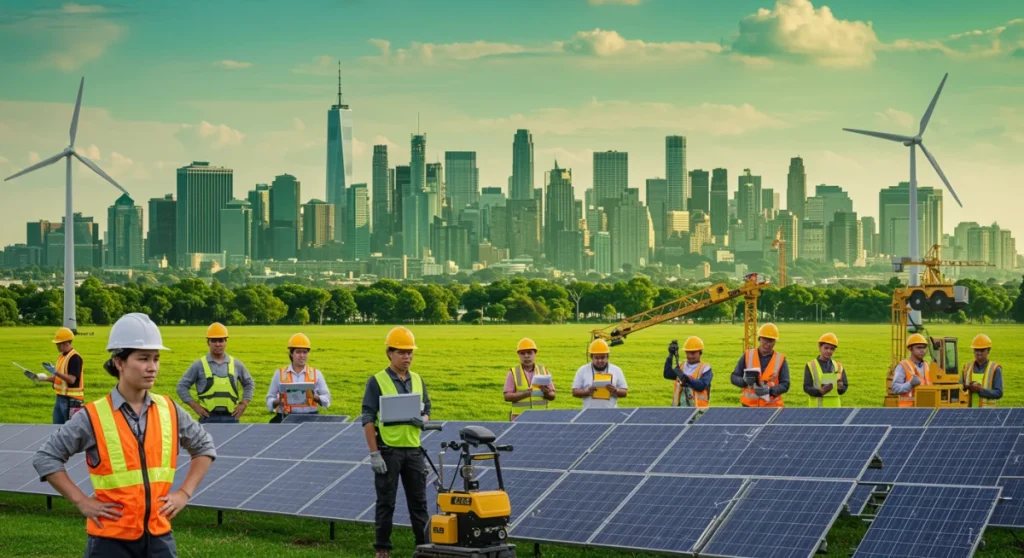
The landscape of work is undergoing a profound transformation, driven by an urgent global need for sustainability. By 2026, the United States will witness an unprecedented surge in demand for careers within the burgeoning green economy. Understanding how to navigate this shift through green economy reskilling is not just an advantage, but a necessity for future career success.
Understanding the Green Economy Shift
The green economy represents a significant paradigm shift in how we produce, consume, and interact with our environment. It’s an economy that aims to reduce environmental risks and ecological scarcities, while simultaneously fostering sustainable development without degrading the environment. This transition is not merely an environmental initiative; it is a powerful economic engine, creating new industries, technologies, and, crucially, new jobs across the United States.
Government policies, consumer demand for sustainable products, and corporate commitments to environmental, social, and governance (ESG) principles are accelerating this shift. Businesses are increasingly recognizing that long-term profitability is intertwined with environmental stewardship. This recognition fuels investment in renewable energy, sustainable agriculture, eco-friendly manufacturing, and smart infrastructure, all of which require specialized skills.
The driving forces of green growth
Several key factors are propelling the expansion of the green economy. Regulatory frameworks, such as incentives for renewable energy and mandates for emissions reductions, play a critical role. Technological advancements, particularly in areas like battery storage, artificial intelligence for energy management, and sustainable materials science, are making green solutions more viable and cost-effective. Furthermore, a growing public awareness of climate change and environmental degradation is shaping consumer preferences and demanding greener practices from industries.
- Government incentives for renewable energy projects.
- Advances in sustainable technology and materials.
- Increased corporate focus on ESG metrics.
- Rising consumer demand for eco-friendly products and services.
The green economy is not a niche sector but a pervasive influence reshaping traditional industries. From finance to manufacturing, and from IT to logistics, every sector is being touched by the imperative for sustainability. This broad impact means that reskilling for green jobs offers a wide array of opportunities, moving beyond traditional environmental roles to encompass a vast spectrum of professions.
Embracing the green economy shift means preparing for a future where environmental considerations are integrated into every business decision. This foresight allows individuals and organizations to capitalize on emerging opportunities and contribute to a more sustainable and prosperous future.
Renewable Energy Technicians and Engineers
The renewable energy sector stands as a cornerstone of the green economy, and its growth trajectory in the US is steep. By 2026, the demand for skilled professionals to install, maintain, and innovate within this field will be immense. This encompasses a broad range of roles, from the hands-on technicians ensuring solar panels and wind turbines operate efficiently, to the engineers designing the next generation of sustainable energy systems.
Solar photovoltaic (PV) installers and wind turbine technicians are already among the fastest-growing occupations in the US. These roles require a blend of technical expertise, safety knowledge, and a commitment to precision. As technology advances, so too will the complexity of these systems, necessitating continuous learning and adaptation for those in the field. The work often involves outdoor environments, working at heights, and a strong understanding of electrical and mechanical systems.
Key skill sets for renewable energy roles
To thrive in this sector, individuals need specialized training. For technicians, this typically involves vocational programs or associate’s degrees focusing on renewable energy technologies. Engineers require bachelor’s or master’s degrees in electrical, mechanical, or environmental engineering, often with a specialization in renewables. Beyond formal education, practical experience and certifications are highly valued. Problem-solving abilities, attention to detail, and a strong understanding of safety protocols are also crucial.
- Technical proficiency in solar, wind, or geothermal systems.
- Strong electrical and mechanical aptitude.
- Adherence to safety regulations and best practices.
- Problem-solving skills for system diagnostics and repair.
The career path for renewable energy professionals is dynamic. Technicians can advance to supervisory roles, project management, or even move into design and engineering with further education. Engineers can specialize in areas like grid integration, energy storage solutions, or policy development. The rapid pace of innovation in this field ensures a constant need for upskilling and professional development, making it an exciting and evolving career choice for those committed to a sustainable future.
Ultimately, careers in renewable energy are not just jobs; they are contributions to a cleaner, more resilient energy infrastructure. The satisfaction of working on projects that directly reduce carbon emissions and combat climate change adds a significant motivational factor to these roles.
Sustainability Consultants and ESG Analysts
As businesses increasingly integrate sustainability into their core strategies, the demand for experts who can guide this transition has skyrocketed. Sustainability consultants and ESG (Environmental, Social, and Governance) analysts are vital in helping organizations navigate complex environmental regulations, optimize resource use, and develop responsible business practices. By 2026, their expertise will be indispensable across nearly all industries in the US.
Sustainability consultants work with companies to identify environmental impacts, develop sustainability strategies, and implement green initiatives. This can range from designing circular economy models for manufacturing to advising on renewable energy adoption or waste reduction programs. Their work often involves data analysis, strategic planning, and effective communication to diverse stakeholders, from executives to employees on the factory floor.
The growing importance of ESG reporting
ESG analysts, on the other hand, focus on evaluating a company’s performance across environmental, social, and governance factors. This analysis is crucial for investors who increasingly prioritize sustainable and ethical businesses. They assess risks and opportunities related to climate change, labor practices, supply chain ethics, and corporate governance. Their findings inform investment decisions and push companies towards greater transparency and accountability.
- Expertise in environmental regulations and compliance.
- Strong analytical skills for data interpretation and strategy development.
- Understanding of global sustainability frameworks (e.g., SDGs).
- Ability to communicate complex information effectively.
The skill set for these roles is multidisciplinary, often requiring a background in environmental science, business, economics, or public policy. Strong analytical capabilities, critical thinking, and excellent communication skills are paramount. Certifications in sustainability management or ESG investing can also significantly boost career prospects. These roles require individuals who can bridge the gap between environmental science and business strategy, translating complex sustainability challenges into actionable plans that benefit both the planet and the bottom line.
Professionals in this area play a pivotal role in shaping the future of responsible business. They are at the forefront of driving corporate change, ensuring that economic growth is pursued in a manner that protects natural resources and promotes social equity. Their influence extends beyond individual companies, contributing to broader systemic shifts towards a more sustainable global economy.
Circular Economy Specialists
The traditional linear economic model of ‘take-make-dispose’ is proving unsustainable. The circular economy, which emphasizes reducing waste, reusing materials, and recycling resources, offers a powerful alternative. By 2026, the US will see a significant expansion in roles dedicated to designing, implementing, and managing circular systems across various industries. These specialists are critical for transitioning towards a more resource-efficient and less wasteful future.
Circular economy specialists can work in diverse capacities, from product design and manufacturing to logistics and waste management. They might be involved in designing products that are easier to repair or recycle, developing new business models based on product-as-a-service, or optimizing supply chains to minimize waste and maximize resource recovery. Their work requires innovative thinking and a holistic understanding of industrial processes and material flows.
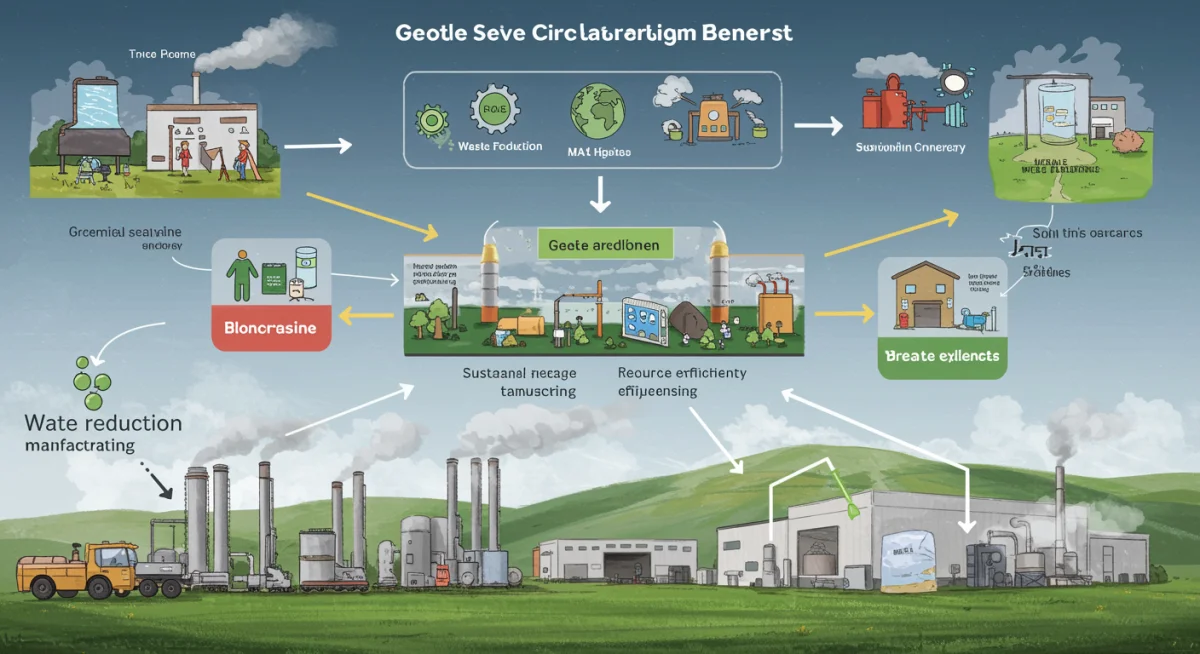
Designing for sustainability and resource recovery
These roles are particularly relevant in sectors like manufacturing, consumer goods, and construction, where large volumes of materials are used and discarded. Specialists will analyze current practices, identify opportunities for circularity, and implement strategies that reduce environmental impact while often creating new economic value. This could involve developing closed-loop systems, where materials are continuously cycled within production, or establishing robust infrastructure for collection, sorting, and reprocessing.
- Knowledge of life cycle assessment (LCA) and sustainable design principles.
- Understanding of material science and waste management technologies.
- Ability to develop and implement circular business models.
- Strong collaboration and project management skills.
Education for circular economy specialists can range from degrees in environmental engineering or industrial design to business administration with a focus on sustainability. Practical experience in supply chain management, operations, or product development is also highly beneficial. As the concept of circularity gains traction, specialized certifications and advanced training programs are also emerging to equip professionals with the necessary tools and methodologies.
The impact of circular economy specialists extends beyond simply reducing waste; they are instrumental in creating more resilient supply chains, fostering innovation, and driving economic growth that is decoupled from finite resource depletion. Their work is fundamental to building a truly sustainable future where resources are valued and kept in use for as long as possible.
Green Building and Infrastructure Managers
The built environment is a major contributor to global carbon emissions and resource consumption. Consequently, the green building and infrastructure sector is experiencing rapid expansion in the US, creating significant opportunities for managers who can oversee sustainable construction, renovation, and urban development projects. By 2026, these professionals will be crucial in transforming our cities and structures into environmentally friendly spaces.
Green building and infrastructure managers are responsible for ensuring that projects adhere to sustainable design principles, utilize eco-friendly materials, and incorporate energy-efficient systems. This involves everything from selecting low-impact construction methods to integrating renewable energy sources and optimizing water usage. They often work with architects, engineers, contractors, and regulatory bodies to ensure projects meet specific green building certifications, such as LEED (Leadership in Energy and Environmental Design).
Managing sustainable urban development
These roles demand a comprehensive understanding of sustainable practices, building codes, and project management principles. They oversee the entire lifecycle of a green project, from initial planning and design to construction, operation, and maintenance. Their expertise helps to reduce the environmental footprint of buildings, lower operational costs through energy and water efficiency, and create healthier indoor environments for occupants.
- Proficiency in green building certifications (e.g., LEED, WELL).
- Knowledge of sustainable materials and construction techniques.
- Strong project management and leadership abilities.
- Understanding of energy efficiency and renewable integration.
A background in construction management, architecture, civil engineering, or environmental science is typically required, often complemented by specialized certifications in green building. Experience with sustainable project delivery methods and an aptitude for problem-solving are also highly valued. These professionals are at the forefront of creating resilient, climate-friendly communities and play a direct role in mitigating the environmental impact of urban growth.
The work of green building and infrastructure managers is not just about constructing buildings; it’s about shaping the spaces where people live, work, and interact. By prioritizing sustainability in every aspect of development, they contribute to a healthier planet and more livable cities for generations to come. Their skills are essential for meeting ambitious climate goals and fostering a truly green urban landscape.
Strategies for Effective Green Economy Reskilling
Entering the green economy, or transitioning within it, requires a strategic approach to reskilling. The rapid evolution of green technologies and sustainable practices means that continuous learning is not just an option, but a necessity. Individuals must proactively identify skill gaps and seek out relevant educational and training opportunities to remain competitive and relevant in this burgeoning job market.
One of the most effective strategies involves leveraging existing expertise. Many green jobs require foundational skills that are transferable from traditional industries. For example, a project manager in conventional construction can reskill to manage green building projects by acquiring knowledge of sustainable materials and certifications. Similarly, a data analyst can pivot to ESG analysis by learning about environmental metrics and reporting frameworks. Identifying these transferable skills is the first step towards an efficient reskilling pathway.
Pathways to acquiring new green skills
Formal education, such as certifications, vocational training, or even advanced degrees in sustainability-related fields, offers structured pathways to new skills. Many universities and community colleges in the US now offer specialized programs in renewable energy, environmental management, and sustainable development. Online platforms also provide a wealth of courses and micro-credentials that can be completed flexibly.
- Identify transferable skills from current or past roles.
- Enroll in specialized certifications or vocational training.
- Pursue degrees or advanced courses in sustainability.
- Engage in internships or volunteer work in green sectors.
Networking within green industry circles is another invaluable strategy. Attending industry conferences, joining professional organizations, and connecting with mentors can provide insights into emerging trends, skill requirements, and job opportunities. These connections can also lead to collaborative projects or mentorships that accelerate the reskilling process. Practical experience, even through internships or volunteer work, offers hands-on application of new skills and builds a valuable portfolio.
Ultimately, effective green economy reskilling is about being agile and forward-thinking. It requires a commitment to lifelong learning and an openness to adapting one’s career trajectory. By strategically investing in new knowledge and skills, individuals can not only secure their place in the future workforce but also contribute meaningfully to a more sustainable world.
Future Trends and Long-Term Outlook
Looking beyond 2026, the green economy is poised for continued, exponential growth, driven by ongoing climate challenges, technological innovation, and evolving global policies. Understanding these future trends is crucial for long-term career planning and identifying where the next wave of sustainable opportunities will emerge. The shift towards a net-zero economy will necessitate profound changes across all sectors, creating new demands and transforming existing roles.
One significant trend is the increasing integration of artificial intelligence and machine learning into green solutions. AI will optimize energy grids, predict maintenance needs for renewable assets, and enhance the efficiency of circular economy processes. This means that data scientists and AI specialists with an understanding of environmental applications will be in high demand. Automation in green manufacturing and waste sorting will also redefine roles, requiring workers with skills in robotics and advanced systems management.
Emerging sectors and interdisciplinary roles
Another area of immense growth will be in climate adaptation and resilience. As the impacts of climate change become more pronounced, there will be a greater need for professionals in areas such as coastal engineering, urban planning for extreme weather, and ecological restoration. These roles will require interdisciplinary skills, combining environmental science with engineering, policy, and community engagement.
- Increased demand for AI and data science in green tech.
- Growth in climate adaptation and resilience roles.
- Expansion of green finance and impact investing.
- Focus on biomimicry and nature-based solutions.
The financial sector will also play an increasingly important role, with green finance and impact investing becoming mainstream. This will create opportunities for financial analysts, portfolio managers, and risk assessors who can evaluate and manage investments based on environmental and social criteria. Furthermore, the development of new sustainable materials and biotechnologies will drive demand for scientists and researchers who can innovate solutions inspired by nature, often referred to as biomimicry.
The long-term outlook for the green economy is one of continuous evolution and expansion. It will require a workforce that is not only skilled but also adaptable, innovative, and committed to sustainable principles. Those who embrace continuous learning and interdisciplinary approaches will be best positioned to thrive in this dynamic and impactful field, contributing to a truly sustainable and prosperous future.
| Green Career Opportunity | Brief Description |
|---|---|
| Renewable Energy Technicians | Install and maintain solar panels, wind turbines, and other clean energy systems. |
| Sustainability Consultants | Advise businesses on environmental impact reduction and sustainable strategies. |
| Circular Economy Specialists | Design and implement systems for waste reduction, reuse, and recycling of materials. |
| Green Building Managers | Oversee sustainable construction, renovation, and infrastructure projects. |
Frequently Asked Questions About Green Economy Careers
The green economy is an economic model that aims to reduce environmental risks and ecological scarcities, while fostering sustainable development without degrading the environment. It focuses on sectors like renewable energy, sustainable agriculture, and eco-friendly manufacturing.
Key skills include technical proficiency in renewable energy systems, data analysis for ESG reporting, sustainable design principles, project management, and a strong understanding of environmental regulations and circular economy concepts.
Reskilling can involve vocational training, certifications in specific green technologies, pursuing advanced degrees in sustainability, or leveraging online courses. Networking and practical experience through internships are also highly beneficial.
Not at all. While environmental science is relevant, the green economy needs diverse skill sets from engineering, business, IT, project management, and even traditional trades, all adapted with a sustainability focus.
The long-term outlook is robust, with continuous growth driven by climate change mitigation efforts, technological advancements, and increasing corporate and consumer demand for sustainability across all sectors.
Conclusion
The green economy is not a fleeting trend but a fundamental shift shaping the future of work in the United States. By 2026, the roles of Renewable Energy Technicians, Sustainability Consultants, Circular Economy Specialists, and Green Building and Infrastructure Managers will be at the forefront of this transformation, offering impactful and sustainable career paths. Embracing green economy reskilling is more than just adapting to change; it is an investment in a resilient career and a healthier planet. Individuals who proactively acquire these in-demand skills will find themselves well-positioned for success in an economy increasingly defined by its commitment to sustainability and innovation.