Optimize Investment Fees 2026: Save 0.5% Annually
Optimizing investment fees in 2026 is crucial for enhancing long-term returns, with various strategies available to help investors save at least 0.5% annually on their portfolios.
Are you looking to make your money work harder for you? In today’s dynamic financial landscape, understanding and actively working towards optimizing your investment fees in 2026 is not just smart, it’s essential. Even a seemingly small reduction, like 0.5% annually, can translate into substantial savings over the long term. This guide will explore practical strategies and comparisons to help you keep more of your hard-earned investment returns.
Understanding the Impact of Investment Fees
Investment fees, often overlooked, can significantly erode your portfolio’s growth over time. Many investors focus solely on returns, forgetting that every dollar paid in fees is a dollar not compounding for their future. In 2026, with market volatility and evolving financial products, a keen eye on these costs is more critical than ever.
Even a seemingly modest fee of 1% per year can reduce your total returns by tens of thousands, or even hundreds of thousands, of dollars over a few decades. This is due to the powerful effect of compound interest working against you instead of for you. Understanding where these fees come from is the first step towards controlling them.
The silent drain: types of fees
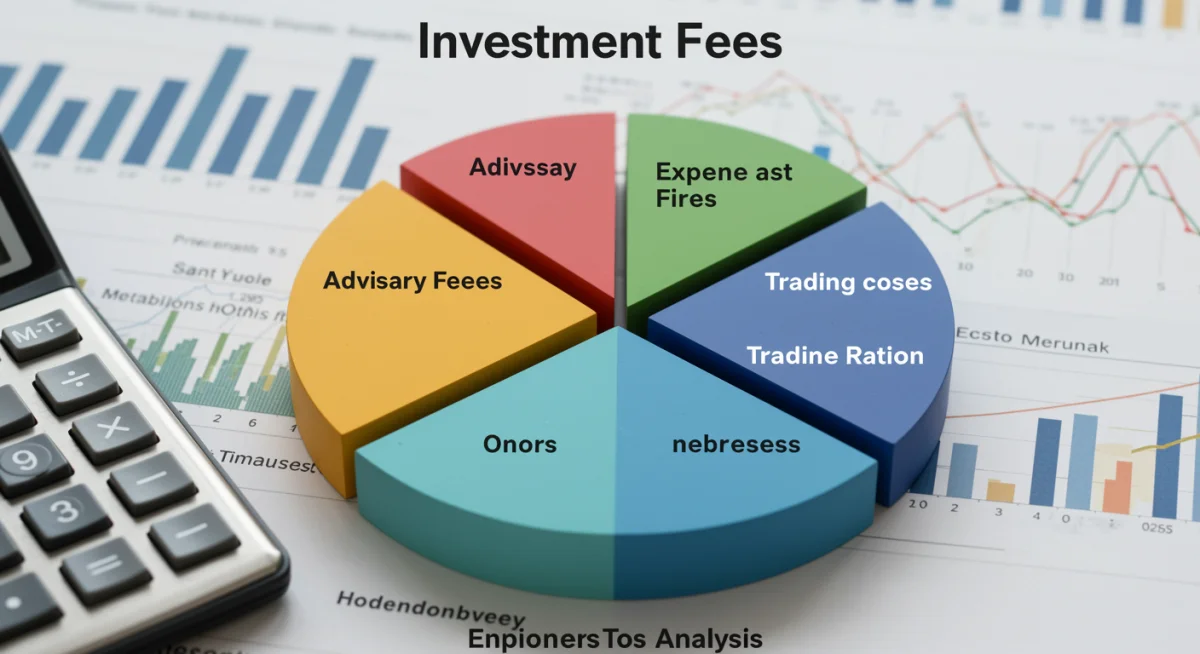
- Expense Ratios: These are annual fees charged by mutual funds and ETFs, expressed as a percentage of your investment. They cover management, administrative, and operating costs.
- Advisory Fees: If you work with a financial advisor, they typically charge a percentage of assets under management (AUM), an hourly rate, or a flat fee.
- Trading Costs: These include commissions paid when buying or selling securities, though many platforms now offer commission-free trading.
- Transaction Fees: Some funds charge fees for buying or selling shares, distinct from expense ratios.
- Account Maintenance Fees: Certain brokerage accounts may charge annual fees for administration.
Each of these fees, individually or combined, can chip away at your investment principal and subsequent gains. By identifying and analyzing each component, investors can begin to strategize on how to minimize their impact effectively. The goal is not to avoid all fees, as some are unavoidable for professional management or specific investment vehicles, but rather to ensure you are paying for value and not overpaying.
The cumulative effect of these fees can be startling. For instance, an investor with a $100,000 portfolio earning 7% annually, paying 1% in fees, will have significantly less after 30 years compared to an investor paying only 0.5% in fees, assuming all other factors are equal. This difference underscores the importance of actively managing your fee structure.
Comparing Low-Cost Investment Vehicles
One of the most direct ways to save 0.5% or more annually on investment fees is by choosing low-cost investment vehicles. The financial industry in 2026 offers a wide array of options, but not all are created equal in terms of cost efficiency. Understanding the differences is paramount.
Exchange-Traded Funds (ETFs) and index funds have revolutionized how investors access diversified portfolios at minimal cost. These vehicles typically track a specific market index, such as the S&P 500, rather than relying on active management to beat the market. This passive approach significantly reduces operational costs.
ETFs vs. actively managed mutual funds
Actively managed mutual funds often come with higher expense ratios, sometimes exceeding 1% or even 1.5% annually. Their managers aim to outperform the market through strategic stock picking and timing, a feat that is notoriously difficult to achieve consistently over the long term. These higher fees can quickly negate any potential outperformance.
ETFs, on the other hand, frequently boast expense ratios below 0.20%, with some core index ETFs even dipping below 0.05%. This substantial difference in fees directly translates into more money remaining in your portfolio, compounding for your benefit. For an investor seeking to save 0.5% or more, shifting from an actively managed fund to an equivalent ETF or index fund is a highly effective strategy.
- Lower Expense Ratios: ETFs and index funds typically have significantly lower management fees compared to actively managed funds.
- Diversification: They offer broad market exposure, reducing single-stock risk.
- Transparency: Holdings are usually disclosed daily for ETFs, offering greater transparency.
- Tax Efficiency: ETFs can be more tax-efficient due to their structure and lower turnover.
The rise of robo-advisors has also made low-cost investing more accessible. These platforms often build diversified portfolios primarily using ETFs and charge a much lower advisory fee than traditional human advisors, typically in the range of 0.25% to 0.50% of AUM. This hybrid approach allows investors to benefit from professional portfolio management at a fraction of the cost, further contributing to optimizing investment fees in 2026.
Negotiating Advisor Fees and Service Tiers
For investors who prefer working with a human financial advisor, optimizing fees doesn’t necessarily mean abandoning professional guidance. In 2026, the landscape of financial advisory services is more competitive and flexible than ever, creating opportunities to negotiate or choose more cost-effective service tiers. Many advisors are open to discussing their fee structures, especially for clients with larger portfolios or those committing to long-term relationships.
Traditional advisory fees, often based on a percentage of assets under management (AUM), can range from 0.5% to 1.5% or more. While this provides comprehensive service, it might be possible to negotiate a lower percentage, especially if your portfolio size warrants it. You might also explore alternative fee structures that better suit your needs and financial situation.
Alternative fee structures to consider
- Hourly Fees: Some advisors charge an hourly rate for their time. This can be cost-effective for investors who only need periodic advice or specific financial planning tasks.
- Flat Fees: A flat fee for specific services, such as a comprehensive financial plan or a portfolio review, can provide clarity and potentially reduce overall costs compared to AUM fees for smaller portfolios.
- Retainer Fees: Similar to flat fees, but paid annually for ongoing advice and service, often more predictable than AUM for high-net-worth individuals.
- Fee-only vs. Fee-based: Understanding the distinction is crucial. Fee-only advisors are compensated solely by their clients, avoiding conflicts of interest from commissions. Fee-based advisors may earn commissions from product sales in addition to client fees. Opting for a fee-only advisor can often lead to more objective advice and potentially lower overall costs.
Before engaging an advisor, or when reviewing an existing relationship, ask detailed questions about their fee structure, what services are included, and whether there’s room for negotiation. Comparing multiple advisors and their offerings can provide leverage and ensure you’re getting value for money. Remember, even a small reduction in advisory fees, say from 1% to 0.75%, directly contributes to the goal of saving 0.5% or more annually on your investment fees.
The Power of Self-Directed Investing and Robo-Advisors
For many investors in 2026, the most significant savings in investment fees can come from embracing self-directed investing or leveraging the growing capabilities of robo-advisors. These approaches empower individuals to take more control over their portfolios while dramatically reducing or even eliminating many traditional fees.
Self-directed investing, facilitated by online brokerage platforms, allows you to build and manage your portfolio without the ongoing costs of a human advisor. With commission-free trading for stocks and ETFs becoming the norm, the primary costs are often limited to the expense ratios of the funds you choose. This strategy requires a certain level of financial literacy and a willingness to dedicate time to research and portfolio maintenance, but the financial rewards in terms of fee savings can be substantial.
Robo-advisors: combining automation with low cost
Robo-advisors offer a compelling middle ground between full-service advisors and completely self-directed investing. These platforms use algorithms to build and manage diversified portfolios based on your risk tolerance and financial goals. Their fees are significantly lower than traditional advisors, typically ranging from 0.25% to 0.50% of AUM annually.
For investors seeking to save 0.5% or more annually, robo-advisors present an attractive option. They automate rebalancing, tax-loss harvesting, and provide access to globally diversified portfolios primarily composed of low-cost ETFs. This automation reduces overhead, allowing them to offer their services at a fraction of the price of human advisors.
- Automated Portfolio Management: Algorithms handle asset allocation, rebalancing, and tax-loss harvesting.
- Lower Advisory Fees: Significantly less expensive than traditional financial advisors.
- Diversification: Portfolios typically consist of globally diversified, low-cost ETFs.
- Accessibility: Low minimum investment requirements make them accessible to a wider range of investors.
While self-directed investing offers the potential for the absolute lowest fees, it demands active engagement. Robo-advisors provide a hands-off approach with managed portfolios at a very competitive price point, making them an excellent choice for those who want professional management without the high costs. Both options are powerful tools for optimizing investment fees in 2026 and maximizing long-term returns.
Strategic Portfolio Rebalancing and Tax Efficiency
Beyond the direct costs of investment vehicles and advisory services, strategic portfolio management, including diligent rebalancing and a focus on tax efficiency, can indirectly contribute to saving 0.5% or more annually in fees and enhancing net returns. These are often overlooked aspects of fee optimization but are crucial for long-term success.
Portfolio rebalancing involves periodically adjusting your asset allocation back to your target percentages. Over time, market movements can cause certain asset classes to grow more than others, shifting your portfolio’s risk profile. Rebalancing helps maintain your desired risk level and can also be an opportunity to minimize embedded costs.
Rebalancing for cost control
When rebalancing, instead of selling appreciated assets and incurring potential capital gains taxes or transaction fees, consider using new contributions to buy into underperforming asset classes. This method, known as ‘rebalancing with new money,’ can help you restore your target allocation without generating taxable events or unnecessary trading costs. This proactive approach can subtly but effectively reduce the overall drag on your portfolio.
Tax efficiency is another powerful, albeit indirect, tool for fee optimization. Taxes are, in essence, another form of cost that reduces your net returns. Strategies like tax-loss harvesting, strategic asset placement, and investing in tax-advantaged accounts can significantly improve your after-tax returns, effectively acting as a form of savings.
- Tax-Loss Harvesting: Selling investments at a loss to offset capital gains and potentially ordinary income.
- Asset Location: Placing tax-inefficient assets (like bonds or REITs) in tax-advantaged accounts (e.g., 401(k), IRA) and tax-efficient assets (like growth stocks or ETFs) in taxable accounts.
- Tax-Advantaged Accounts: Maximizing contributions to 401(k)s, IRAs, HSAs, and 529 plans, which offer tax deferral or tax-free growth, reducing the impact of taxes on your investments.
By thoughtfully integrating these rebalancing and tax-efficiency strategies, investors can create a robust framework that not only manages direct fees but also minimizes other financial drains. In 2026, a holistic view of your investment costs, including taxes, is essential for truly optimizing your portfolio’s performance and achieving that crucial 0.5% annual saving or more.
Regular Review and Adaptation of Investment Strategy
The financial world is constantly evolving, and what works today might not be the optimal strategy tomorrow. In 2026, a commitment to regular review and adaptation of your investment strategy is paramount for continuously optimizing investment fees. This proactive approach ensures your portfolio remains aligned with your financial goals, risk tolerance, and the most cost-effective options available.
Many investors set up their portfolios and then forget about them, only to find years later that they are paying outdated or unnecessarily high fees. Market innovations, new financial products, and changes in your personal circumstances all warrant a periodic re-evaluation. Schedule an annual or semi-annual review of your investment statements and fee disclosures.
Key areas for periodic review
When conducting your review, focus on several critical areas:
- Expense Ratios of Funds: Check if there are newer, lower-cost ETFs or index funds available that track the same market segments as your current holdings.
- Advisory Fees: If you use an advisor, reassess the value they provide relative to their fees. Don’t hesitate to inquire about potential adjustments or alternative service models.
- Trading Costs and Platform Fees: Ensure your brokerage platform still offers competitive trading costs and doesn’t have hidden maintenance fees. Consider if a different platform might offer better value.
- Portfolio Performance (Net of Fees): Evaluate your portfolio’s performance after all fees have been deducted. This gives you a true picture of your returns.
- Personal Financial Changes: Life events like a new job, marriage, children, or retirement can alter your financial goals and risk tolerance, necessitating adjustments to your investment strategy and potentially your fee structure.
Staying informed about industry trends and new investment products can also help you identify opportunities for cost savings. For example, the emergence of fractional share investing or specialized thematic ETFs might offer new ways to diversify or target specific growth areas without incurring prohibitive costs. The goal is to be agile and willing to make changes when a more cost-efficient and equally effective option becomes available. This continuous vigilance is a cornerstone of successfully optimizing your investment fees in 2026 and beyond, ensuring you consistently save that 0.5% or more annually.
| Key Strategy | Brief Description |
|---|---|
| Choose Low-Cost Funds | Invest in ETFs and index funds with low expense ratios to minimize management fees. |
| Negotiate Advisor Fees | Discuss alternative fee structures or lower AUM percentages with financial advisors. |
| Utilize Robo-Advisors | Benefit from automated portfolio management at significantly lower advisory costs. |
| Focus on Tax Efficiency | Employ strategies like tax-loss harvesting and asset location to boost after-tax returns. |
Frequently Asked Questions About Investment Fees
An expense ratio is the annual fee charged by a fund (mutual fund or ETF) for its operating expenses, expressed as a percentage of your investment. It’s crucial because it directly reduces your annual returns, and even small differences can lead to significant long-term impacts on your portfolio’s growth, making lower ratios highly desirable.
Robo-advisors utilize algorithms to manage diversified portfolios, primarily with low-cost ETFs. Their automated nature and lower overhead allow them to charge significantly less (typically 0.25% to 0.50% of AUM) compared to traditional human financial advisors, thus reducing overall investment fees for clients.
Yes, it is often possible to negotiate fees with financial advisors, especially if you have a substantial portfolio or are a long-term client. You can discuss lower percentage rates, explore flat-fee arrangements for specific services, or opt for hourly consultations to better control your costs and align with your financial needs.
Tax-loss harvesting involves selling investments at a loss to offset capital gains and potentially a limited amount of ordinary income. By strategically realizing losses, investors can reduce their tax liability, effectively increasing their after-tax returns. This indirect saving can contribute significantly to overall investment optimization.
Regular review of investment fees in 2026 is crucial because the financial landscape is dynamic. New, lower-cost products emerge, and your personal financial situation changes. Periodic checks ensure your portfolio remains cost-efficient, aligned with your goals, and takes advantage of the latest opportunities to minimize expenses and maximize net returns.
Conclusion
Optimizing your investment fees in 2026 is not merely about cutting costs; it’s a strategic imperative for enhancing your long-term wealth accumulation. As demonstrated, even a seemingly modest reduction of 0.5% annually can have a profound impact on your portfolio’s growth over decades. By diligently choosing low-cost investment vehicles, strategically engaging with financial advisors, leveraging the power of self-directed platforms and robo-advisors, and implementing tax-efficient strategies, investors can proactively manage and minimize the silent drain of fees. Regular review and adaptation are key to sustaining these savings and ensuring your investment strategy remains robust and cost-effective in an ever-evolving financial market. Taking control of your fees today means securing a more prosperous financial future tomorrow.