Q2 2026 Small Business Grants: Unlock Growth Opportunities Now
Anúncios
Maximizing Q2 2026 Growth: Time-Sensitive Small Business Grant Opportunities
As we approach the second quarter of 2026, the landscape for small businesses is brimming with potential, particularly for those astute enough to tap into the numerous small business grants available. These aren’t just handouts; they are strategic investments designed to stimulate economic growth, foster innovation, and support entrepreneurial endeavors across various sectors. For many small business owners, securing one of these highly competitive grants can be the pivotal factor that propels their operations from mere survival to sustainable success and significant expansion. Understanding the nuances of these opportunities, especially their time-sensitive nature, is paramount.
The Q2 2026 window for grant applications is a crucial period, often characterized by a surge in available funding from federal, state, local, and private organizations. These entities recognize the invaluable role small business grants play in job creation, community development, and technological advancement. However, the sheer volume of information can be overwhelming, and the application processes are frequently complex and demanding. This comprehensive guide aims to demystify the world of small business grants, offering a clear roadmap for identifying, preparing for, and ultimately securing the funding your business needs to thrive in Q2 2026 and beyond.
Anúncios
From understanding eligibility criteria to crafting compelling proposals and navigating the post-award compliance, we will delve into every aspect crucial for maximizing your chances of success. Our focus will be on actionable strategies and practical advice, ensuring that you are well-equipped to leverage these time-sensitive opportunities effectively. Don’t let your business miss out on the chance to secure non-dilutive funding that can fuel innovation, expand operations, and strengthen your market position. Let’s embark on this journey to unlock the full potential of small business grants for your enterprise.
Anúncios
Understanding the Landscape of Q2 2026 Small Business Grants
The grant ecosystem for small businesses is dynamic, with new opportunities emerging constantly, particularly as fiscal quarters begin. Q2 2026 is no exception, promising a fresh wave of funding designed to address specific economic priorities. These priorities often reflect current governmental initiatives, societal needs, or industry-specific advancements. For instance, you might find grants focused on technological innovation, environmental sustainability, minority-owned businesses, women-owned businesses, veteran-owned businesses, or those located in economically distressed areas. The key to success lies in understanding these underlying objectives and aligning your business’s mission and proposed project with the grant provider’s goals.
Federal grants, often the largest in terms of funding, are typically administered through agencies like the Small Business Administration (SBA), Department of Commerce, or Department of Energy. These grants usually have extensive application requirements and rigorous reporting standards but offer substantial financial support. State and local government grants, while smaller in scale, can be more accessible and tailored to regional economic development goals. They might target businesses creating jobs within a specific county or those contributing to local infrastructure projects. Private foundations and corporations also offer a wealth of small business grants, often driven by their philanthropic missions or corporate social responsibility initiatives. These can be highly specialized, focusing on particular industries, social impact, or demographic groups.
The time-sensitive nature of Q2 2026 grants means that application windows are often narrow, sometimes just a few weeks or months. Missing a deadline can mean waiting another year or more for a similar opportunity. Therefore, proactive research and meticulous preparation are not just recommended but absolutely essential. Start by identifying which types of grants are most relevant to your business model, industry, and growth objectives. Are you looking to fund research and development? Expand into new markets? Purchase new equipment? Or perhaps train your workforce? Each of these goals might have specific grant programs designed to support them. Thoroughly researching the grant landscape will save you time and effort by allowing you to focus on opportunities that genuinely align with your business needs and increase your chances of securing valuable small business grants.
Identifying Relevant Small Business Grants for Your Enterprise
The first and most critical step in securing small business grants is effective identification. With thousands of grant opportunities available, narrowing down the field to those that are truly relevant to your business can be a daunting task. However, by employing a systematic approach, you can efficiently pinpoint the grants that offer the best fit and highest probability of success. Begin by clearly defining your business’s needs. What specific project or initiative requires funding? What is the estimated budget? What impact will this funding have on your business and, by extension, your community or industry?
Once you have a clear understanding of your needs, you can begin your search. Several online databases and resources specialize in listing small business grants. Websites like Grants.gov (for federal grants), state economic development agency websites, and reputable grant search platforms (e.g., Candid, GrantWatch, Foundation Group) are excellent starting points. Many industry-specific associations also compile lists of grants pertinent to their members. For example, a technology startup might look to tech incubators or venture capital firms that also offer grant programs, while a non-profit might focus on grants from philanthropic foundations.
Pay close attention to the eligibility criteria for each grant. This is where many businesses falter. Criteria can include business size, revenue, number of employees, location, industry, ownership demographics (e.g., minority, woman, veteran-owned), and even the stage of your business (startup vs. established). Do not waste time applying for grants for which you do not meet all the specified requirements. Furthermore, review the grant’s purpose and objectives. Successful grant applications demonstrate a strong alignment between the applicant’s project and the grantor’s mission. If a grant is designed to promote sustainable agriculture, and your business is in urban tech, it’s likely not a good fit, regardless of how attractive the funding amount might be. By meticulously vetting each potential opportunity, you can focus your efforts on the most promising small business grants for Q2 2026.
Crafting a Winning Grant Proposal: Key Components and Best Practices
Once you’ve identified suitable small business grants, the real work begins: crafting a compelling grant proposal. This document is your business’s advocate, a narrative that convinces the grantor that your project is worthy of their investment. A well-structured proposal typically includes several key components, each serving a specific purpose in presenting your case effectively.
Executive Summary: This is arguably the most crucial section. It should be a concise, powerful overview of your entire proposal, highlighting your business’s mission, the problem you address, your proposed solution, the funding requested, and the expected impact. It should grab the reader’s attention and compel them to read further.
Problem Statement/Needs Assessment: Clearly articulate the problem your business or project aims to solve. Provide data, statistics, and anecdotal evidence to demonstrate the significance of this problem. Explain why current solutions are inadequate and how your business offers a superior approach.
Project Description/Goals and Objectives: Detail your proposed project. What exactly will you do with the grant money? Outline specific, measurable, achievable, relevant, and time-bound (SMART) goals and objectives. For example, instead of saying ‘we will grow,’ say ‘we will increase market share by 15% in the next 12 months by launching a new product line.’ This section should clearly link back to the problem statement.
Methodology/Action Plan: Describe the specific activities and steps you will undertake to achieve your project goals. Who will be responsible for what? What resources will be utilized? Provide a realistic timeline for project completion. This demonstrates your capacity for execution.
Organizational Capacity/Qualifications: Showcase your team’s expertise, experience, and track record of success. Highlight any previous achievements relevant to the proposed project. Grantors want to know that their investment is in capable hands.
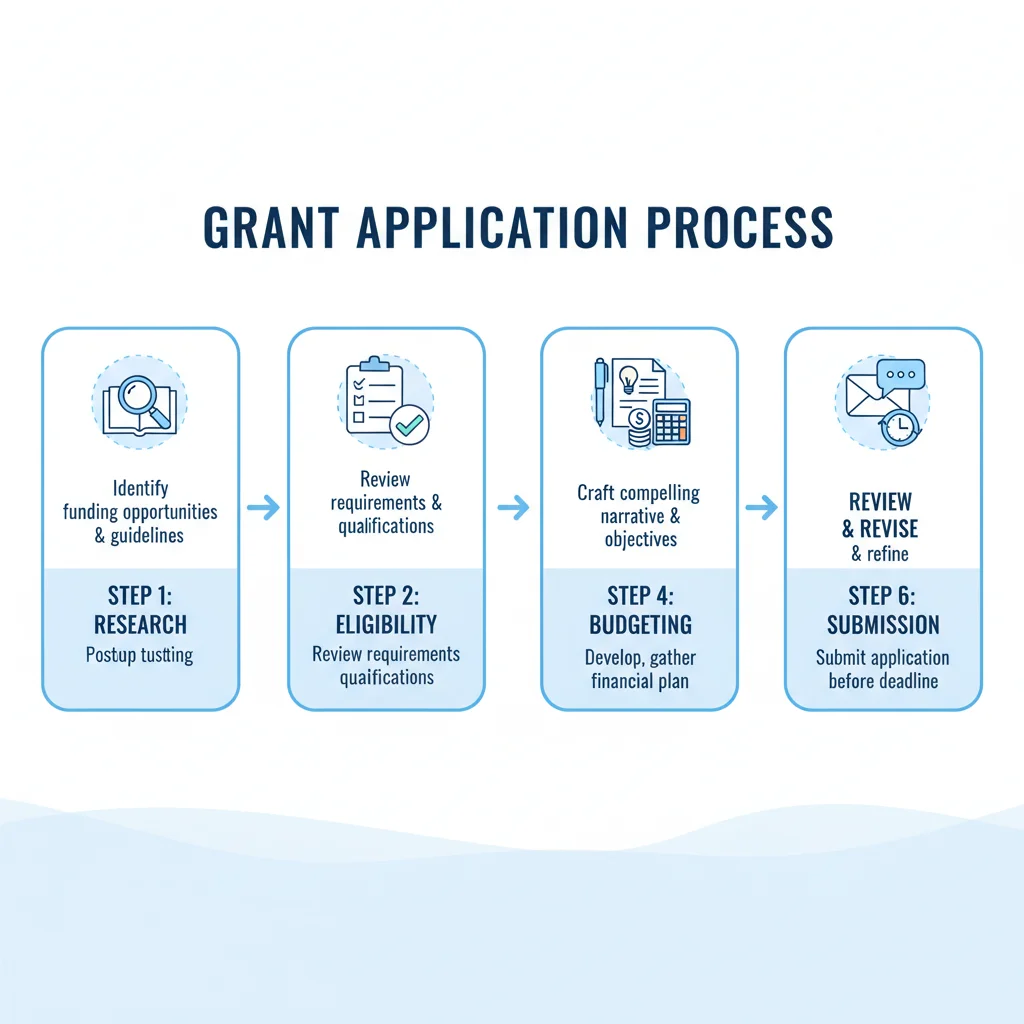
Budget and Justification: Present a detailed, line-item budget that clearly outlines how the grant funds will be spent. Every expense should be justified and directly related to the project’s objectives. Be transparent and realistic. Many grant applications fail due to poorly constructed budgets. Some grants require matching funds, so be prepared to demonstrate your own financial commitment.
Evaluation Plan: Explain how you will measure the success of your project. What metrics will you use? How will you track progress? This demonstrates accountability and allows the grantor to assess the impact of their funding. This is particularly important for small business grants that focus on measurable outcomes.
Sustainability Plan: How will your project continue after the grant funding ends? Grantors are often interested in long-term impact. Outline your plans for securing future funding or generating revenue to sustain the project’s benefits.
Appendices: Include supporting documents such as letters of support, resumes of key personnel, financial statements, permits, and any other relevant materials that strengthen your proposal.
Best Practices for Proposal Writing:
- Read Instructions Carefully: This cannot be stressed enough. Follow all guidelines, formatting requirements, and submission procedures precisely.
- Tailor Each Proposal: Generic proposals rarely succeed. Customize your narrative to address the specific mission and priorities of each grantor.
- Be Clear and Concise: Use plain language, avoid jargon, and get straight to the point. Grant reviewers often read many proposals.
- Proofread Meticulously: Errors undermine credibility. Have multiple people review your proposal for grammar, spelling, and factual accuracy.
- Start Early: Grant writing takes time. Do not rush the process, especially for complex small business grants.
- Seek Feedback: Share your draft with mentors, colleagues, or grant writing professionals for constructive criticism.
The Application Process: Navigating Deadlines and Submission Requirements
The application process for small business grants can vary significantly from one grantor to another, but a few common themes prevail: strict deadlines, precise submission requirements, and the need for meticulous attention to detail. Missing a deadline, even by a minute, almost always results in disqualification. Therefore, creating a detailed timeline for each application is essential. As soon as you identify a promising grant, mark its submission deadline prominently on your calendar and work backward to set internal milestones for each stage of the proposal development.
Many grant applications are now submitted online through dedicated portals. Familiarize yourself with these platforms well in advance. Some require you to register and create an account, which can take several days to process. Technical glitches can occur, so do not wait until the last minute to upload your documents. It’s always a good practice to submit your application at least a day or two before the absolute deadline to account for any unforeseen issues. For physical submissions, ensure all documents are properly collated, signed, and sent via a trackable delivery service.
Beyond the proposal itself, grantors often require specific supporting documentation. This can include your business’s legal registration documents, tax identification numbers, financial statements (profit and loss, balance sheets, cash flow projections), business plans, organizational charts, letters of recommendation, and permits or licenses. Ensure all these documents are up-to-date, accurate, and readily available. Having a centralized repository for all your business’s essential paperwork can significantly streamline the application process for small business grants.
Furthermore, some grants may require an initial letter of intent (LOI) or a concept paper before inviting a full proposal. Treat these preliminary steps with the same rigor as a full application, as they are often used to filter out less suitable candidates. The information you provide in an LOI should be compelling enough to secure an invitation to the next stage. Understanding and adhering to every single submission requirement is a non-negotiable aspect of successfully navigating the application process for small business grants in Q2 2026.
Post-Award Management and Compliance for Small Business Grants
Securing a small business grant is a significant achievement, but it’s not the end of the journey. In fact, it marks the beginning of a new phase: post-award management and compliance. Grantors provide funding with the expectation that it will be used precisely as outlined in the approved proposal and that the grantee will adhere to specific reporting requirements. Failure to comply can lead to serious repercussions, including the clawback of funds, damage to your business’s reputation, and disqualification from future grant opportunities.
The first step after receiving a grant award is to thoroughly review the grant agreement or contract. This document will detail all the terms and conditions, including reporting schedules, allowable expenses, audit requirements, and any specific deliverables. It’s crucial to understand your obligations fully. Establish a dedicated system for tracking grant expenditures. This might involve setting up a separate accounting ledger or using specialized grant management software. Every dollar spent must be accounted for and align with the approved budget. Keep meticulous records of all receipts, invoices, and financial transactions related to the grant. This documentation will be vital during audits or reporting periods.

Regular reporting is a standard requirement for most small business grants. These reports typically include financial updates, progress reports on project activities, and outcome assessments. Be prepared to demonstrate how your project is meeting its stated goals and objectives. Provide concrete evidence of progress, such as data, photographs, testimonials, or project milestones achieved. If your project encounters unforeseen challenges or requires modifications, communicate proactively with the grantor. Transparency and open communication are highly valued and can help mitigate potential issues.
Furthermore, be aware of any specific audit requirements. Some grants, particularly federal ones, may subject your business to periodic audits to ensure compliance with financial regulations and grant terms. Being prepared with organized records and a clear understanding of your grant agreement will make this process much smoother. Successful post-award management not only ensures compliance but also builds a positive relationship with the grantor, potentially opening doors to future funding opportunities. It reinforces your business’s credibility and demonstrates your commitment to responsible stewardship of resources, further enhancing your ability to secure more small business grants in the future.
Beyond the Money: The Strategic Value of Small Business Grants
While the primary appeal of small business grants is undoubtedly the non-dilutive funding they provide, their value extends far beyond mere financial injection. Securing a grant can offer a multitude of strategic advantages that can significantly bolster your business’s growth and standing in the market. Firstly, grants serve as a powerful validation of your business concept and operational capabilities. When a reputable organization or government agency chooses to invest in your project, it signals to other potential investors, partners, and customers that your business is legitimate, innovative, and has a strong potential for success. This ‘stamp of approval’ can be invaluable for attracting further investment or securing new contracts.
Secondly, the process of applying for grants itself can be a highly beneficial exercise. It forces you to critically evaluate your business model, refine your strategic plan, and articulate your goals and objectives with unparalleled clarity. This rigorous self-assessment can uncover areas for improvement, inspire new ideas, and strengthen your overall business strategy. The detailed planning required for a grant proposal, particularly for small business grants, often results in a more robust and actionable business plan than you might otherwise develop.
Thirdly, grants can open doors to new networks and resources. Many grant programs come with mentorship opportunities, access to specialized training, or connections to industry experts. Grant-making organizations often have extensive networks they are willing to share with their grantees, providing invaluable support and guidance that money alone cannot buy. These connections can lead to strategic partnerships, new client opportunities, and enhanced visibility within your industry.
Moreover, grants often support projects that are innovative or address critical societal needs. Being associated with such initiatives can significantly enhance your brand’s reputation and corporate social responsibility profile. This positive public image can attract socially conscious customers and talented employees who are drawn to businesses making a meaningful impact. In essence, small business grants are not just about receiving funds; they are about leveraging strategic opportunities that can accelerate your business’s development, enhance its credibility, and position it for long-term success in Q2 2026 and beyond.
Conclusion: Seizing Your Q2 2026 Small Business Grant Opportunity
The journey to securing small business grants for Q2 2026 is undoubtedly challenging, demanding meticulous research, strategic planning, and flawless execution in proposal writing and application submission. However, the rewards—non-dilutive funding, enhanced credibility, invaluable connections, and a refined business strategy—make the effort profoundly worthwhile. These grants represent more than just financial aid; they are catalysts for innovation, expansion, and sustainable growth, offering a unique pathway for small businesses to achieve their full potential without incurring debt or diluting equity.
As we’ve explored, success in the grant landscape hinges on a multi-faceted approach: clearly defining your needs, diligently identifying relevant opportunities, meticulously crafting compelling proposals, and stringently adhering to post-award compliance. Each step is critical, and overlooking any detail can diminish your chances. The time-sensitive nature of Q2 2026 grants underscores the urgency of proactive engagement. Begin your research now, gather your documents, and start drafting your proposals with ample time for review and refinement.
Remember, every successful grant application begins with a deep understanding of the grantor’s mission and a clear articulation of how your business’s project aligns with their objectives. By demonstrating not only the viability of your project but also its broader impact, you significantly increase your chances of standing out in a competitive field. Don’t be discouraged by initial rejections; view them as learning opportunities to refine your approach for future applications. The world of small business grants is vast and constantly evolving, and persistence is a key virtue.
Embrace the challenge, leverage the resources available, and position your small business to capture the significant funding opportunities that Q2 2026 has to offer. By doing so, you’re not just securing capital; you’re investing in the future of your enterprise, paving the way for innovation, job creation, and lasting economic impact. Seize these time-sensitive opportunities to transform your aspirations into tangible achievements and propel your business towards unprecedented growth.