Maximizing Your 2026 FMLA Leave: A Step-by-Step Guide to Securing 12 Weeks of Protected Time

Anúncios
In the evolving landscape of employee rights and workplace benefits, understanding the nuances of the Family and Medical Leave Act (FMLA) is more crucial than ever. As we look towards 2026, employees need to be equipped with the most current information to confidently navigate their rights and secure the protected time off they may need. This comprehensive guide is designed to be your definitive resource for maximizing your 2026 FMLA leave, offering a step-by-step approach to understanding eligibility, the application process, and the often-overlooked financial implications.
The FMLA provides eligible employees with up to 12 workweeks of unpaid, job-protected leave per year for specific family and medical reasons. These reasons include the birth of a child and to care for the newborn child within one year of birth; the placement with the employee of a child for adoption or foster care and to care for the newly placed child within one year of placement; to care for the employee’s spouse, child, or parent who has a serious health condition; a serious health condition that makes the employee unable to perform the essential functions of their job; or any qualifying exigency arising out of the fact that the employee’s spouse, child, or parent is a covered military member on active duty or has been notified of an impending call or order to active duty in the Armed Forces. Furthermore, an eligible employee may take up to 26 workweeks of leave during a single 12-month period to care for a covered servicemember with a serious injury or illness if the employee is the servicemember’s spouse, child, parent, or next of kin.
Anúncios
While the core tenets of the FMLA have remained consistent since its inception, minor adjustments and interpretations can occur, making it essential to stay informed. This article will delve into practical solutions and strategies to ensure your 2026 FMLA leave is as smooth and beneficial as possible, touching upon everything from initial eligibility checks to managing your return to work. Our goal is to empower you with the knowledge to assert your rights and utilize this vital protection effectively.
Anúncios
Understanding Your Eligibility for 2026 FMLA Leave
Before you can even consider taking leave, the first and most critical step is to determine if you are eligible for 2026 FMLA leave. The FMLA has specific criteria that both the employee and the employer must meet. Understanding these requirements is fundamental to a successful FMLA application.
Employee Eligibility Criteria
To be eligible for FMLA leave, an employee must meet three key criteria:
- Employment Duration: You must have worked for your employer for at least 12 months. These 12 months do not need to be consecutive. For example, if you worked for an employer for six months, left, and then returned to work for them for another six months, you would meet this requirement.
- Hours Worked: You must have worked at least 1,250 hours during the 12 months immediately preceding the start of the leave. This averages out to approximately 24 hours per week. It’s important to note that paid time off (PTO) and holidays generally do not count towards these 1,250 hours, as they are not hours actually worked.
- Worksite Location: You must work at a location where the employer has at least 50 employees within 75 miles. This criterion is often overlooked but is crucial, especially for employees in smaller branches or remote offices.
It’s vital to remember that meeting these criteria does not automatically grant you FMLA leave; it only establishes your eligibility to request it. Your employer still needs to approve the leave based on a qualifying reason.
Employer Eligibility Criteria
Not all employers are covered by the FMLA. Generally, the FMLA applies to:
- Private sector employers with 50 or more employees in 20 or more workweeks in the current or preceding calendar year, including joint employers and successors in interest.
- Public agencies (federal, state, and local government employers) regardless of the number of employees.
- Public or private elementary and secondary schools, regardless of the number of employees.
If your employer falls into one of these categories, they are generally required to comply with the FMLA. If you are unsure about your employer’s status, you can consult your HR department or the Department of Labor’s website.
Qualifying Reasons for 2026 FMLA Leave
Beyond eligibility, your reason for requesting leave must also align with the FMLA’s provisions. The FMLA specifies several qualifying reasons for which an eligible employee can take protected leave:
- Birth of a Child and Care for the Newborn: This includes both biological parents and those acting in loco parentis. Leave must be taken within one year of the child’s birth.
- Placement of a Child for Adoption or Foster Care: Similar to birth, leave must be taken within one year of the child’s placement.
- Care for a Spouse, Child, or Parent with a Serious Health Condition: A serious health condition typically involves inpatient care, incapacity for more than three consecutive calendar days with continuing treatment, or chronic serious health conditions.
- Employee’s Own Serious Health Condition: This applies when an employee is unable to perform the essential functions of their job due to a serious health condition.
- Qualifying Exigency for Military Family Leave: This covers certain situations arising from a spouse, child, or parent being a covered military member on active duty or called to active duty.
- Military Caregiver Leave (Servicemember Family Leave): This allows up to 26 workweeks in a single 12-month period to care for a covered servicemember with a serious injury or illness.
It’s important to understand the definition of a ‘serious health condition’ under FMLA. This is often where confusion arises. The Department of Labor provides detailed guidance on what constitutes a serious health condition, and it’s advisable to review this if you are unsure. Your doctor will typically need to certify the condition.
The Step-by-Step Application Process for 2026 FMLA Leave
Once you’ve established eligibility and a qualifying reason, the next hurdle is the application process. While it might seem daunting, breaking it down into manageable steps can make it much clearer.
Step 1: Notify Your Employer
The FMLA requires employees to provide their employer with notice of their need for leave. The timing of this notice is crucial:
- Foreseeable Leave: If the need for leave is foreseeable (e.g., scheduled surgery, childbirth), you must provide at least 30 days’ advance notice. If 30 days’ notice is not practicable, you must provide notice as soon as possible.
- Unforeseeable Leave: If the need for leave is unforeseeable (e.g., sudden illness, emergency), you must provide notice as soon as practicable. This typically means within one or two business days after learning of the need for leave, barring unusual circumstances.
It’s best practice to provide notice in writing, even if you also notify your supervisor verbally. This creates a record and helps prevent misunderstandings. Your employer may require you to follow specific internal procedures for requesting leave.
Step 2: Employer Responsibilities and Response
Once you notify your employer, they have specific responsibilities:
- Eligibility Notice: Within five business days of your request, your employer must inform you of your eligibility for FMLA leave. If you are not eligible, they must provide at least one reason why.
- Rights and Responsibilities Notice: At the same time, or as soon as practicable, your employer must provide you with a written notice detailing your rights and responsibilities under the FMLA. This notice should include information about medical certification requirements, substitution of paid leave, maintenance of health benefits, and job restoration rights.
- Designation Notice: Once your employer has enough information, they must notify you whether the leave is designated as FMLA-qualifying within five business days. If the leave is designated as FMLA, they must inform you of the amount of leave that will be counted against your FMLA entitlement.
Step 3: Medical Certification
For leave due to your own serious health condition or that of a family member, your employer will likely require medical certification. This is a crucial document that validates your need for leave. Your employer must provide you with a form for this purpose, typically a WH-380-E (for employee’s serious health condition) or WH-380-F (for family member’s serious health condition).
Here’s what you need to know about medical certification:
- Completion: Your healthcare provider must complete the form, providing sufficient information to confirm a serious health condition and the necessity of leave. They cannot be required to disclose a diagnosis.
- Deadline: You typically have 15 calendar days to return the completed certification to your employer. If you fail to do so, your employer may delay or deny your FMLA leave.
- Clarification/Second Opinion: If your employer has reason to doubt the validity of the certification, they may require a second opinion at their expense. If the second opinion differs from the first, a third opinion may be required, also at the employer’s expense, which would be binding.
It is crucial to communicate promptly with your healthcare provider to ensure the certification is completed accurately and submitted on time. Delays here can significantly impact your 2026 FMLA leave.

Practical Solutions for Managing Your 2026 FMLA Leave
Securing your 2026 FMLA leave is just the first step. Effectively managing it requires careful planning and communication. Here are some practical solutions to ensure a smooth leave period.
Intermittent Leave and Reduced Schedule Leave
FMLA leave doesn’t always have to be taken in one continuous block. It can also be taken intermittently or on a reduced work schedule:
- Intermittent Leave: Taking leave in separate blocks of time for a single qualifying reason. For example, an employee might take FMLA leave for chemotherapy treatments two days a week.
- Reduced Schedule Leave: Reducing your usual number of working hours per workday or workweek. For example, an employee might work half-days while recovering from surgery.
Both intermittent and reduced schedule leave require medical necessity certification and employer approval, particularly for foreseeable needs. Your employer may temporarily transfer you to an alternative position with equivalent pay and benefits that better accommodates your recurring periods of leave.
Substitution of Paid Leave
Although FMLA leave is unpaid, employees often have the option to substitute accrued paid leave (such as vacation, personal, or sick leave) for some or all of their FMLA leave. This can significantly mitigate the financial impact of your 2026 FMLA leave.
- Employee’s Choice: You can choose to use your accrued paid leave concurrently with your FMLA leave.
- Employer’s Requirement: In some cases, your employer may require you to substitute accrued paid leave for FMLA leave.
It’s important to understand your company’s policy on substituting paid leave, as this can vary. Be sure to discuss this with your HR department well in advance.
Maintaining Health Benefits
One of the most significant protections of FMLA is the requirement for employers to maintain your group health benefits during your leave, under the same conditions as if you had not taken leave. This means you are still responsible for paying your portion of the health insurance premiums.
- Premium Payments: Your employer must inform you of the arrangements for paying your share of health insurance premiums while on leave.
- Failure to Pay: If you fail to pay your premiums, your employer’s obligation to maintain health coverage may cease.
Ensure you understand the payment schedule and methods to avoid any lapse in coverage during your 2026 FMLA leave.
Job Restoration Rights
Upon your return from FMLA leave, you generally have the right to be restored to your original job or to an equivalent job with equivalent pay, benefits, and other terms and conditions of employment. This ‘job protection’ is a cornerstone of the FMLA.
- Equivalent Position: The equivalent position must have virtually identical pay, benefits, and working conditions.
- Exceptions: While rare, there are limited exceptions to job restoration, such as for ‘key employees’ (salaried employees among the highest paid 10% of all employees within 75 miles of the worksite) if restoration would cause substantial and grievous economic injury to the employer.
Documenting your return date and communicating with your employer before your return is vital for a smooth transition back to work.
Financial Impact and Planning for 2026 FMLA Leave
While the FMLA provides job protection, it generally does not provide paid leave. This means that for many, taking 2026 FMLA leave can have a significant financial impact. Proactive financial planning is essential.
Assessing Your Financial Situation
Before taking leave, conduct a thorough assessment of your finances:
- Create a Budget: Understand your monthly expenses and identify areas where you can cut back during your leave.
- Savings: Determine how much savings you have available to cover living expenses during the unpaid period.
- Other Income: Explore any other potential sources of income, such as a spouse’s earnings or short-term disability benefits.
Exploring Paid Leave Options
Beyond substituting your own accrued paid leave, there might be other avenues for income during your 2026 FMLA leave:
- Company-Specific Policies: Some employers offer paid family leave or short-term disability benefits that run concurrently with FMLA. Check your employee handbook or speak with HR.
- State or Local Paid Leave Laws: A growing number of states and localities have enacted their own paid family and medical leave laws. These laws often run concurrently with FMLA but provide wage replacement. Research if your state or city offers such benefits. Examples include California, New Jersey, New York, Rhode Island, Washington, Massachusetts, and the District of Columbia, among others. These programs typically involve contributions from employees and/or employers and provide a percentage of your wages during leave.
- Short-Term Disability Insurance: If you have short-term disability insurance, either through your employer or a private policy, it may cover a portion of your income during leave for your own serious health condition or for childbirth recovery. Understand the waiting periods and benefit amounts.
Combining these options can significantly reduce the financial strain of unpaid FMLA leave. It’s crucial to understand how each benefit interacts with FMLA and with each other.
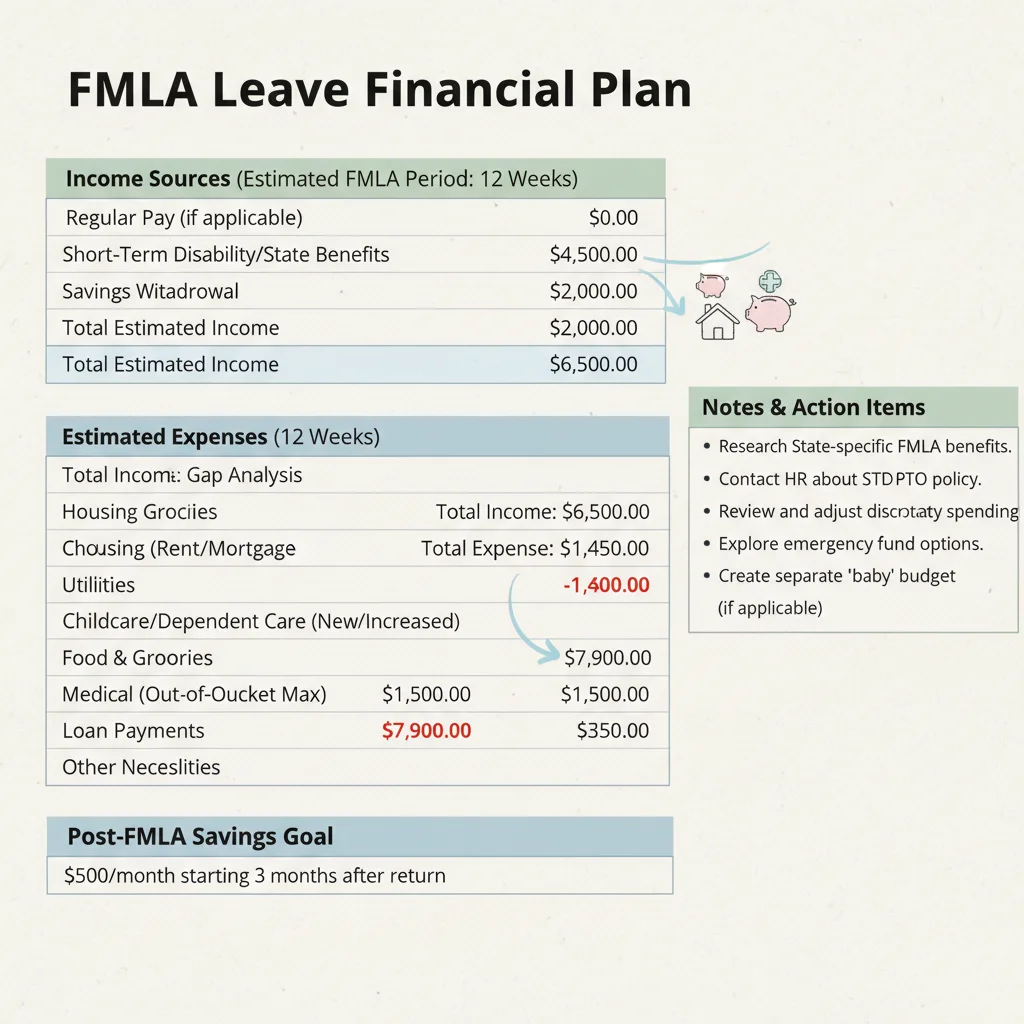
Budgeting During Unpaid Leave
If you anticipate a period of unpaid leave, disciplined budgeting is key:
- Prioritize Expenses: Identify essential expenses (housing, food, utilities) and non-essential ones.
- Reduce Discretionary Spending: Cut back on dining out, entertainment, and other non-essential purchases.
- Emergency Fund: Ideally, you should have an emergency fund sufficient to cover several months of living expenses. If not, start building one as soon as you anticipate needing FMLA leave.
- Communication with Creditors: If you foresee difficulty making payments, contact your creditors proactively to discuss options.
Common Pitfalls and How to Avoid Them with Your 2026 FMLA Leave
Even with thorough planning, navigating 2026 FMLA leave can present challenges. Being aware of common pitfalls can help you avoid them.
Inadequate Notice
One of the most frequent issues is failing to provide timely and proper notice. Always err on the side of providing more notice than required, and always follow up verbal notifications with written documentation. Keep copies of all communications.
Insufficient Medical Certification
A common reason for FMLA denials or delays is incomplete or vague medical certification. Ensure your healthcare provider understands the FMLA requirements and completes the form fully and accurately. Follow up with them if there are any questions from your employer.
Misunderstanding Your Company’s Policies
While FMLA is a federal law, your employer may have additional policies that run concurrently or offer greater benefits. Always review your employee handbook and consult with HR to understand how FMLA interacts with your company’s specific leave, PTO, and disability policies.
Failure to Return Documents Promptly
Employers have deadlines for you to return required forms and certifications. Missing these deadlines can lead to delays, denial of leave, or even termination of employment if not handled properly. Mark all deadlines on your calendar and set reminders.
Not Tracking Your Leave Usage
If you are taking intermittent FMLA leave, it’s crucial to keep your own detailed records of all leave taken. While your employer should also track this, having your own records can help you monitor your remaining entitlement and reconcile any discrepancies.
Returning to Work After 2026 FMLA Leave
The FMLA doesn’t just cover your time off; it also protects your return to work. A smooth transition back is as important as a well-managed leave.
Communication Before Return
Communicate with your employer about your anticipated return date well in advance, especially if there are any changes to your original plan. This allows them to prepare for your reintegration.
Fitness-for-Duty Certification
For leave due to your own serious health condition, your employer may require you to provide a ‘fitness-for-duty’ certification from your healthcare provider before returning to work. This certifies that you are able to resume your job duties. Your employer must inform you of this requirement in the FMLA designation notice.
Managing the Transition
Returning to work after a significant leave can be challenging. Be prepared for a period of adjustment. If your job duties have changed slightly or new procedures have been implemented, don’t hesitate to ask for clarification or retraining. Open communication with your supervisor is key.
Key Takeaways for Your 2026 FMLA Leave
Navigating the complexities of the Family and Medical Leave Act requires diligence and proactive planning. By focusing on your 2026 FMLA leave, you’re taking a vital step in securing your future and protecting your career while attending to critical personal or family needs. Here’s a recap of the most important points:
- Know Your Rights: Understand the FMLA’s core provisions, including eligibility criteria for both employees and employers, and the specific qualifying reasons for leave.
- Plan Ahead: Whenever possible, plan your leave well in advance. This includes providing timely notice to your employer and gathering all necessary documentation.
- Document Everything: Keep meticulous records of all communications, forms, and certifications related to your FMLA leave. This protects you in case of disputes.
- Understand Financial Implications: FMLA is generally unpaid. Explore all potential avenues for income replacement, such as paid leave substitution, state/local paid leave programs, and short-term disability insurance. Create a budget to manage finances during your leave.
- Communicate Effectively: Maintain open and clear communication with your HR department and supervisor throughout the entire process, from initial request to return to work.
- Seek Clarification: If you are unsure about any aspect of FMLA, do not hesitate to ask your HR department, consult the Department of Labor’s resources, or seek legal advice.
The FMLA is a powerful tool designed to help employees balance work and life’s significant events without fear of job loss. By thoroughly understanding and strategically utilizing your 2026 FMLA leave, you can ensure that you receive the protection and support you are entitled to. This guide aims to empower you to navigate this process with confidence and peace of mind, allowing you to focus on what truly matters during your time away.
Remember, your well-being and that of your family are paramount. The FMLA is there to support you during these critical times. By being informed and prepared, you can maximize its benefits and return to your professional life recharged and ready to contribute.