Small Business Supply Chain Optimization: 3-Month Plan 2026

Anúncios
Optimizing Your Small Business Supply Chain: A 3-Month Plan for 2026 (Practical Solutions)
In today’s fast-paced and ever-evolving market, a robust and efficient small business supply chain is not just an advantage—it’s a necessity for survival and growth. For small businesses, the complexities of managing inventory, logistics, suppliers, and customer expectations can be daunting. Yet, with strategic planning and targeted action, even the leanest operations can achieve remarkable improvements. This comprehensive guide outlines a practical 3-month plan for 2026, designed to help your small business optimize its supply chain, enhance resilience, reduce costs, and boost overall efficiency.
Anúncios
The global landscape has taught us valuable lessons about supply chain vulnerabilities. From unforeseen disruptions to rapid shifts in consumer demand, businesses of all sizes must be agile and adaptable. For a small business, these challenges can feel amplified, making proactive optimization efforts crucial. By focusing on key areas over a structured 3-month period, you can transform your small business supply chain from a potential bottleneck into a powerful engine for success.
Anúncios
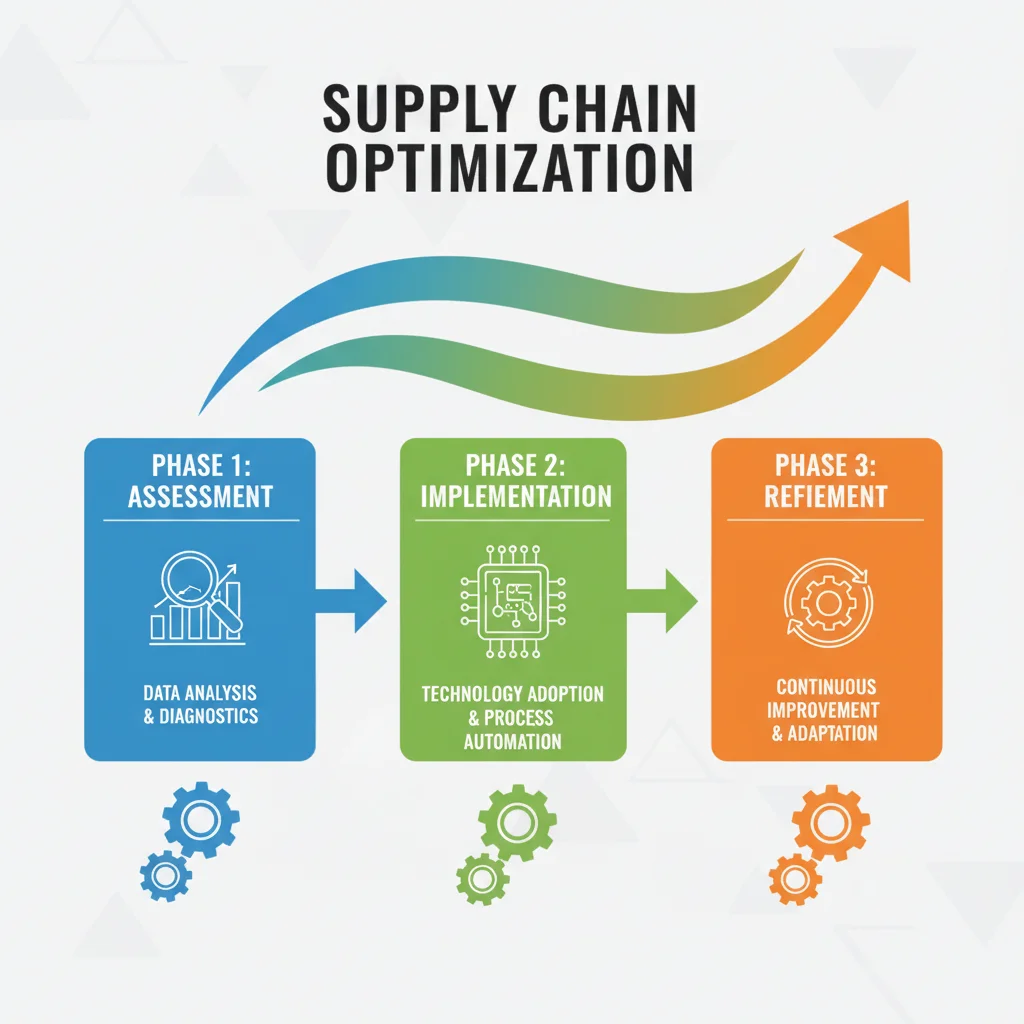
Month 1: Assessment and Foundation Building
The first month of our small business supply chain optimization plan is dedicated to understanding your current operations, identifying weaknesses, and laying the groundwork for improvement. This phase is critical for making informed decisions and ensuring that subsequent actions are targeted and effective.
Week 1-2: Comprehensive Supply Chain Audit
Begin by conducting a thorough audit of your entire supply chain, from sourcing raw materials to delivering the final product to your customer. This involves mapping out every step and identifying all stakeholders.
- Map Your Current Process: Document every stage of your supply chain. Who are your suppliers? How do products move from them to you, and then to your customers? What are the transportation methods, storage locations, and distribution channels?
- Data Collection and Analysis: Gather data on key performance indicators (KPIs) such as lead times, inventory turnover rates, order fulfillment accuracy, shipping costs, and supplier performance. Look for historical trends and identify any recurring issues.
- Identify Bottlenecks and Pain Points: Where are the delays? What processes are inefficient? Are there areas with excessive costs or quality control issues? Talk to your team members across different departments—their insights are invaluable.
- Supplier Evaluation: Assess your current suppliers. Are they reliable? Do they offer competitive pricing and quality? What are their lead times? Consider diversifying your supplier base to mitigate risks.
Week 3-4: Technology Review and Goal Setting
Once you have a clear picture of your current state, it’s time to evaluate your technological capabilities and set clear, measurable goals for your small business supply chain.
- Assess Existing Technology: What software are you currently using for inventory management, order processing, shipping, and accounting? Are these systems integrated? Could new technologies (e.g., inventory management software, CRM, ERP light solutions) improve efficiency?
- Define Clear Objectives: Based on your audit, set specific, measurable, achievable, relevant, and time-bound (SMART) goals. Examples include: reducing lead times by 15%, decreasing shipping costs by 10%, improving inventory accuracy to 98%, or expanding to a new distribution channel.
- Budget Allocation: Determine how much you can realistically invest in new tools, training, or process changes. Prioritize initiatives that offer the highest return on investment.
- Team Alignment: Ensure your entire team understands the goals and their role in achieving them. Foster a culture of continuous improvement and open communication.
Month 2: Implementation and Optimization Strategies
With a solid understanding of your current supply chain and clear objectives, Month 2 focuses on implementing targeted strategies to optimize your operations. This is where the practical solutions for your small business supply chain truly come into play.
Week 5-6: Inventory Management and Supplier Relationship Enhancement
Effective inventory management is the cornerstone of an efficient small business supply chain. Simultaneously, strengthening supplier relationships can lead to better terms and reliability.
- Optimize Inventory Levels: Implement strategies like Just-In-Time (JIT) where appropriate, or reorder point systems to minimize carrying costs while avoiding stockouts. Analyze demand forecasts to anticipate needs accurately. Consider using ABC analysis to prioritize inventory management efforts based on item value and sales volume.
- Implement Inventory Management Software (IMS): If not already in place, invest in an affordable and scalable IMS. This can automate tracking, reduce manual errors, and provide real-time insights into stock levels.
- Negotiate with Suppliers: Revisit contracts with key suppliers. Can you negotiate better pricing, payment terms, or lead times? Explore bulk discounts or long-term agreements.
- Develop Supplier Performance Metrics: Establish clear metrics for evaluating supplier performance (e.g., on-time delivery, quality, responsiveness) and communicate these expectations. Consider having backup suppliers for critical components.
Week 7-8: Logistics, Warehousing, and Process Streamlining
This period focuses on improving the physical movement and storage of goods, as well as refining internal processes to eliminate waste and enhance speed within your small business supply chain.
- Optimize Shipping and Transportation: Evaluate different carriers and shipping methods. Are you getting the best rates? Can consolidating shipments save money? Explore partnerships with local delivery services or leveraging third-party logistics (3PL) providers for specific routes or peak seasons.
- Warehouse Layout and Efficiency: If you have your own storage, review its layout. Can you optimize space utilization, improve picking routes, and reduce handling times? Implement clear labeling and organization systems.
- Automate Repetitive Tasks: Identify manual processes that can be automated, such as order entry, invoice processing, or inventory updates. This frees up staff for more strategic tasks and reduces human error.
- Standardize Procedures: Create clear, documented standard operating procedures (SOPs) for all key supply chain activities. This ensures consistency, simplifies training, and reduces errors.
Month 3: Performance Monitoring, Risk Mitigation, and Future-Proofing
The final month is about solidifying your improvements, establishing mechanisms for continuous monitoring, and preparing your small business supply chain for future challenges and opportunities. This ensures long-term sustainability and resilience.
Week 9-10: Performance Tracking and Data-Driven Adjustments
It’s not enough to implement changes; you must continuously monitor their impact and be prepared to make adjustments based on real-world data.
- Set Up Dashboards and Reporting: Create visual dashboards to track your key supply chain KPIs in real-time. This allows for quick identification of deviations and performance trends. Tools like Google Data Studio or even advanced Excel dashboards can be very effective.
- Regular Performance Reviews: Schedule weekly or bi-weekly meetings to review supply chain performance with your team. Discuss what’s working, what’s not, and brainstorm solutions for ongoing issues.
- Gather Customer Feedback: Actively solicit feedback from customers regarding delivery times, product availability, and overall service. Their insights are crucial for understanding the end-user experience and identifying areas for improvement in your small business supply chain.
- Make Data-Driven Adjustments: Based on the data and feedback, be prepared to iterate and refine your processes. Supply chain optimization is an ongoing journey, not a one-time event.
Week 11-12: Risk Mitigation and Building Resilience
The final weeks focus on protecting your optimized small business supply chain from future disruptions and positioning it for sustained success.
- Develop a Risk Management Plan: Identify potential risks (e.g., natural disasters, supplier bankruptcy, geopolitical events, cybersecurity threats) and develop contingency plans for each. This includes having alternative suppliers, emergency communication protocols, and backup logistics options.
- Diversify Your Supply Base: If you haven’t already, actively work on diversifying your supplier network. Relying on a single supplier for critical components can be a significant vulnerability.
- Consider Local Sourcing: Explore opportunities for local sourcing to reduce lead times, transportation costs, and environmental impact, while also supporting local economies. This can add resilience to your small business supply chain.
- Invest in Employee Training: Ensure your team is well-trained on new systems, processes, and risk management protocols. A knowledgeable and adaptable workforce is a key asset in supply chain resilience.
- Explore Sustainability Initiatives: Look for ways to make your supply chain more environmentally friendly. This can include optimizing routes to reduce fuel consumption, choosing eco-friendly packaging, or partnering with sustainable suppliers. This not only benefits the planet but can also appeal to a growing segment of environmentally conscious consumers.

Key Technologies for Small Business Supply Chain Optimization
While large enterprises often invest in complex ERP systems, small businesses can leverage accessible and affordable technologies to significantly enhance their small business supply chain efficiency. Here are some key areas:
- Inventory Management Systems (IMS): Cloud-based solutions like Zoho Inventory, Fishbowl, or Cin7 Core (formerly Dear Systems) offer features like real-time stock tracking, automated reordering, and multi-location management at an affordable price point.
- Order Management Systems (OMS): Often integrated with e-commerce platforms, an OMS streamlines order processing, fulfillment, and shipping. Shopify, BigCommerce, and WooCommerce often have built-in or plug-in OMS capabilities.
- Shipping and Logistics Software: Platforms like ShipStation, Shippo, or EasyPost integrate with multiple carriers, allow for rate comparisons, print labels, and track shipments, simplifying the outbound logistics for any small business supply chain.
- CRM (Customer Relationship Management) Software: While primarily for sales and marketing, CRM systems (e.g., HubSpot, Zoho CRM) can provide valuable insights into customer demand and preferences, which directly impacts inventory planning and fulfillment strategies.
- Analytics and Reporting Tools: Beyond built-in software reports, tools like Microsoft Power BI or Google Data Studio can consolidate data from various sources to create customized, actionable dashboards for your small business supply chain.
- Communication and Collaboration Tools: Tools like Slack, Microsoft Teams, or Asana can improve internal communication and coordination across different departments involved in the supply chain, from purchasing to customer service.
Overcoming Common Small Business Supply Chain Challenges
Small businesses face unique hurdles when it comes to supply chain management. Understanding these and having strategies to overcome them is vital for successful optimization.
Limited Resources
Unlike large corporations, small businesses often operate with tighter budgets and fewer personnel. This means every investment in your small business supply chain must be carefully considered for its ROI. Focus on cost-effective, scalable solutions and prioritize the most impactful changes first. Leverage free trials of software, negotiate hard with suppliers, and explore shared services or 3PLs to avoid large capital expenditures.
Lack of Data Visibility
Many small businesses rely on manual processes or disparate systems, leading to a lack of real-time data. This makes it difficult to make informed decisions. Implementing even basic inventory or order management software can dramatically improve visibility. Encourage data input discipline and integrate systems where possible to create a single source of truth for your small business supply chain.
Reliance on Single Suppliers
For cost or convenience, small businesses often rely heavily on one or two key suppliers. This creates significant risk. Actively seek out alternative suppliers, even if they’re just for backup. Building relationships with multiple vendors can provide leverage in negotiations and ensure continuity during disruptions. This is a crucial step in building a resilient small business supply chain.
Forecasting Inaccuracies
Predicting demand can be challenging, especially for businesses with seasonal sales or rapidly changing product lines. Improve forecasting by analyzing historical sales data, tracking market trends, and collaborating with your sales and marketing teams. Consider using simple forecasting models available in spreadsheet software or basic IMS. Start small and refine your approach over time.
Scalability Issues
As a small business grows, its supply chain needs to scale with it. What works for 10 orders a day might crumble under 100. When choosing technology or partners, always consider their scalability. Can the software handle increased volume? Can your 3PL partner accommodate growth? Planning for scalability from the outset prevents costly overhauls later on in your small business supply chain journey.
The Long-Term Benefits of an Optimized Small Business Supply Chain
Investing time and resources into optimizing your small business supply chain yields a multitude of long-term benefits that contribute directly to your bottom line and market position:
- Reduced Operational Costs: By streamlining processes, optimizing inventory, and negotiating better terms, you can significantly lower expenses related to purchasing, storage, and transportation.
- Improved Cash Flow: Efficient inventory management reduces capital tied up in stock, freeing up cash for other business investments or operations.
- Enhanced Customer Satisfaction: Faster, more reliable deliveries and fewer order errors lead to happier customers, repeat business, and positive word-of-mouth referrals.
- Increased Agility and Resilience: A well-optimized supply chain is better equipped to respond to market changes, unexpected disruptions, and seasonal demand fluctuations.
- Better Decision-Making: Access to real-time data and clear performance metrics empowers you to make more informed strategic decisions.
- Competitive Advantage: An efficient and responsive small business supply chain can differentiate you from competitors, allowing you to offer better service, faster delivery, or more competitive pricing.
- Sustainable Growth: By building a scalable and robust supply chain, you lay a solid foundation for future expansion without encountering debilitating logistical hurdles.
Conclusion: Your Path to a Stronger Small Business Supply Chain in 2026
Optimizing your small business supply chain is an ongoing journey, but by following this structured 3-month plan for 2026, you can achieve significant improvements and set your business up for sustained success. Start with a thorough assessment, implement targeted strategies for inventory, suppliers, and logistics, and then focus on continuous monitoring and risk mitigation. Embrace technology, foster strong relationships, and empower your team with the right tools and training.
The market will continue to present challenges and opportunities. By proactively strengthening your supply chain, your small business will not only navigate these effectively but also emerge more resilient, efficient, and profitable. Begin your optimization journey today, and watch your small business supply chain become a true asset in 2026 and beyond.