Scholarship Search 2026: 4 Untapped Resources Yielding Over $10,000 Annually

Anúncios
Scholarship Search 2026: 4 Untapped Resources Yielding Over $10,000 Annually
The quest for higher education often comes with a significant financial burden. While many students are aware of federal aid, institutional scholarships, and large national awards, a wealth of lesser-known opportunities, or untapped scholarship resources, remain largely undiscovered. For students planning their academic journey in 2026 and beyond, delving into these overlooked avenues can unlock substantial financial assistance, potentially amounting to over $10,000 annually. This comprehensive guide will illuminate four such resources, providing actionable strategies to help you navigate the scholarship landscape with greater success.
Anúncios
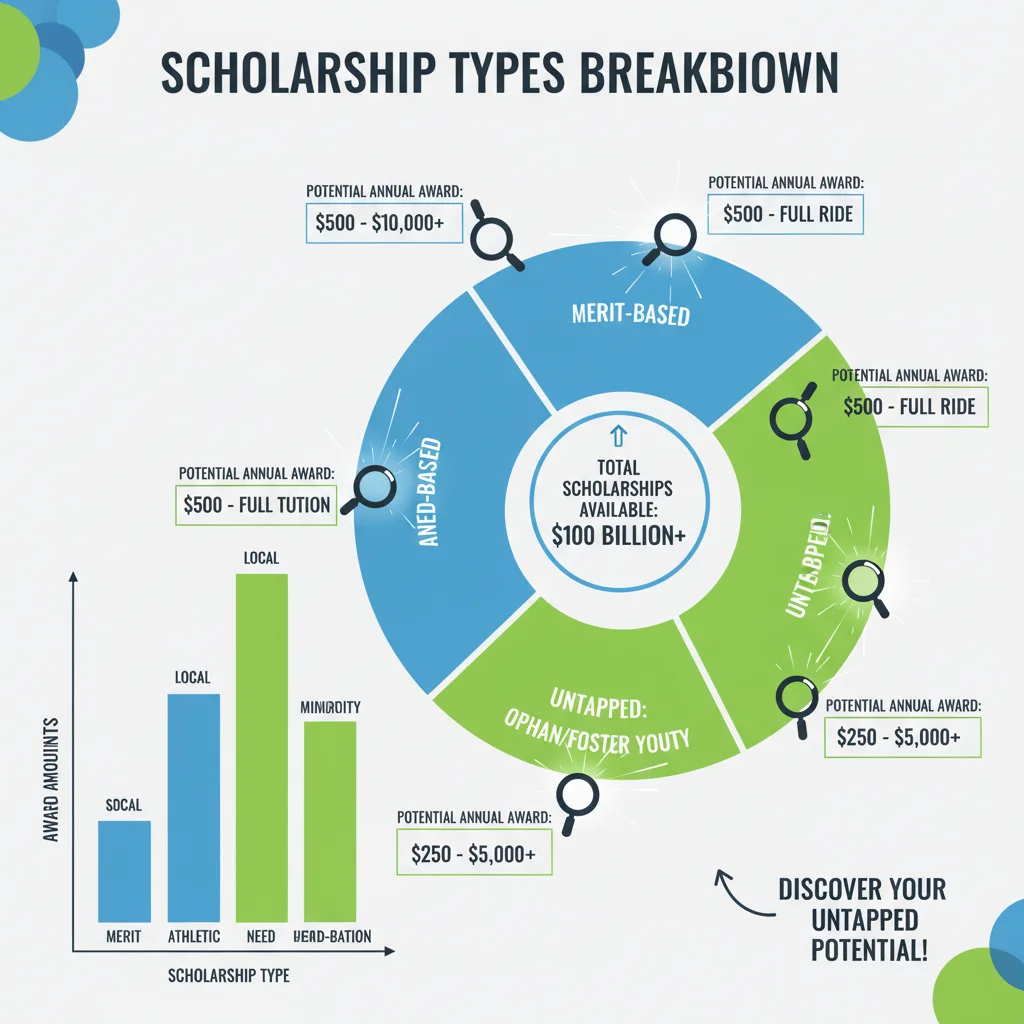
The traditional scholarship search often leads students to highly competitive awards, where thousands of applicants vie for a limited number of grants. While these are certainly worth pursuing, the real goldmine often lies in the less-trodden paths. These untapped scholarship resources typically have fewer applicants, increasing your odds of securing funding. By diversifying your search and focusing on these niche areas, you can significantly enhance your financial aid package for 2026.
Anúncios
Understanding where to look is the first crucial step. Many students stop at the obvious choices, missing out on opportunities that are specifically designed for individuals with unique backgrounds, interests, or affiliations. This article aims to arm you with the knowledge to unearth these hidden gems, transforming your 2026 scholarship search from a daunting task into a strategic, rewarding endeavor.
1. Professional Organizations and Industry Associations
One of the most consistently overlooked categories of untapped scholarship resources comes from professional organizations and industry associations. These groups are dedicated to supporting the growth of their respective fields, and part of that commitment often involves fostering the next generation of talent through scholarships. Whether you’re aspiring to be an engineer, a nurse, a journalist, an artist, or a business professional, there’s likely an association for it, and many of them offer financial aid.
Why are these resources untapped?
Many students don’t realize the sheer number of such organizations or the breadth of their scholarship programs. They often assume these are only for graduate students or those already established in a career. However, a significant portion of these scholarships target undergraduate students, and sometimes even high school seniors planning to enter a specific field.
How to find them:
Start by identifying your major or intended career path. Then, use search engines to look for ‘professional organizations for [your major]’ or ‘industry associations for [your career interest]’. For example, if you’re interested in nursing, search for ‘American Nurses Association scholarships’ or ‘National Student Nurses’ Association scholarships’. If you’re pursuing engineering, look for the ‘National Society of Professional Engineers scholarships’ or specific engineering discipline societies like the ‘IEEE’ (Institute of Electrical and Electronics Engineers).
Examples of Potential Organizations:
- American Medical Association (AMA) / American Nurses Association (ANA): For healthcare-related fields.
- American Bar Association (ABA): For pre-law or law students.
- Society of Women Engineers (SWE) / National Society of Black Engineers (NSBE): For engineering students, often with a focus on diversity.
- Public Relations Society of America (PRSA) / Society of Professional Journalists (SPJ): For communications and journalism majors.
- American Institute of Architects (AIA): For architecture students.
Many of these organizations have local chapters, which can be even more fruitful. Local chapters often offer smaller, less competitive scholarships because their reach is limited, meaning fewer applicants. Don’t underestimate the power of a $500 or $1,000 local scholarship; these can quickly add up, contributing significantly to your goal of over $10,000 annually.
When you visit their websites, look for sections like ‘Scholarships,’ ‘Education,’ ‘Grants,’ or ‘Student Resources.’ Pay close attention to eligibility requirements, application deadlines, and essay prompts. Networking within these organizations can also open doors to mentorship and future career opportunities, making them doubly valuable untapped scholarship resources.
2. Local Community Foundations and Civic Groups
Another often-overlooked category of untapped scholarship resources lies within your own community. Local community foundations, Rotary Clubs, Lions Clubs, Kiwanis Clubs, and other civic organizations are deeply invested in the well-being and future of their local residents. They often establish scholarship programs specifically for students from their service area, meaning the applicant pool is significantly smaller and more localized than national awards.
Why are these resources untapped?
Students often focus on national searches, believing larger awards are more impactful. However, the cumulative effect of several local scholarships can easily surpass a single, highly competitive national award. Furthermore, local organizations may not have the same online presence as larger entities, requiring a more proactive, localized search.
How to find them:
Start by identifying your local community foundation. A quick search for ‘[Your City/County] Community Foundation’ should yield results. These foundations often manage a multitude of scholarship funds established by local donors, businesses, and families. Their websites typically have a dedicated section detailing available scholarships, eligibility criteria, and application processes.
Next, explore local civic groups. Check the websites of your local Rotary Club, Lions Club, Kiwanis, Elks Lodge, or even local churches and temples. Many of these groups have a strong tradition of community service, which includes providing educational scholarships to local students. Your high school guidance counselor is an excellent resource for identifying these local opportunities, as they often receive announcements directly from these organizations.

Don’t forget local businesses! Some local banks, credit unions, hospitals, and even small businesses offer scholarships to students from their area, often with unique criteria related to their industry or community involvement. A visit to your local Chamber of Commerce website or even a physical visit to local businesses might uncover these gems.
Tips for Local Applications:
- Highlight community involvement: Local organizations value applicants who are engaged in their community. Emphasize any volunteer work, local leadership roles, or community service you’ve undertaken.
- Personalize your application: Since the applicant pool is smaller, you have a better chance to make a personal connection. Mention specific local ties, how you plan to contribute to the community after your education, or how the organization’s mission resonates with you.
- Ask your guidance counselor: They are often the first to know about new local scholarships and can provide invaluable advice on tailoring your application.
Securing multiple smaller local scholarships is a highly effective strategy for accumulating significant funds. These untapped scholarship resources are often less daunting to apply for and can provide a steady stream of financial support for your 2026 academic year.
3. Niche Scholarships for Unique Characteristics or Talents
Beyond academic merit and financial need, there’s a vast world of niche scholarships designed for students with unique characteristics, talents, hobbies, or affiliations. These are truly untapped scholarship resources because many students either don’t realize they qualify or don’t know where to look for them. From scholarships for left-handed students to those for aspiring duck callers, the diversity is astounding, and the competition is often minimal.
Why are these resources untapped?
The sheer specificity of these scholarships means that only a small percentage of students will even be eligible, automatically reducing the applicant pool. Many students also don’t think to search for scholarships based on their less conventional attributes or interests.
How to find them:
Brainstorm every unique aspect of yourself. Consider your ethnicity, religion, family background (e.g., parents’ employers, military service), hobbies, talents, physical characteristics, or even unusual interests. Then, use these keywords in your scholarship search.
Categories to Explore:
- Ethnic and Religious Affiliations: Many organizations provide scholarships specifically for students of certain ethnic backgrounds (e.g., Hispanic Scholarship Fund, UNCF) or religious affiliations (e.g., Jewish Federations, Knights of Columbus).
- Family Background:
- Parents’ Employers: Many large corporations offer scholarships to the children of their employees. Check with your parents’ HR departments.
- Military Service: If a parent or grandparent served in the military, you might be eligible for scholarships from organizations like the American Legion, Veterans of Foreign Wars (VFW), or specific military branch associations.
- Unions: If your parents are members of a union, they may have scholarship programs for dependents.
- Hobbies and Talents: Are you a talented musician, artist, athlete, gamer, or debater? There are scholarships for almost every talent imaginable.
- Performing Arts: Scholarships for dancers, musicians, actors.
- Creative Arts: Scholarships for writers, painters, photographers, graphic designers.
- Athletics: Beyond NCAA scholarships, many smaller organizations offer aid for specific sports or athletic achievements.
- Unique Skills: Scholarships for public speaking, essay writing contests, even specific video games.
- Physical Characteristics/Medical Conditions: Yes, there are scholarships for being tall, left-handed, or for students managing specific medical conditions (e.g., diabetes, cancer survivors).
- Academic Interests (Beyond Major): Some scholarships are for students interested in specific niche academic areas, like textile history, mushroom cultivation, or obscure languages.
Use scholarship search engines (like Fastweb, Scholarships.com, College Board’s BigFuture) but be very specific with your keywords. Instead of just ‘scholarships,’ try ‘scholarships for [your ethnicity],’ ‘scholarships for [your hobby],’ or ‘scholarships for children of [parent’s employer/union].’ The more specific you are, the better your chances of finding these truly untapped scholarship resources.
Creating a detailed personal inventory of all your unique attributes is a powerful first step in uncovering these hidden opportunities. Don’t dismiss any aspect of your identity or interests; they could be the key to unlocking significant financial aid for 2026.
4. University-Specific Departmental and Program-Based Awards
While most students are aware of general university scholarships (merit-based, need-based), many overlook the highly specific awards offered directly by academic departments or specialized programs within their chosen institution. These are prime examples of untapped scholarship resources because they often have very specific criteria, limiting the applicant pool to only those students already admitted to or interested in a particular field of study within that university.
Why are these resources untapped?
These scholarships are usually not advertised on the main university financial aid page. Instead, they are housed within individual department websites or are communicated directly by department faculty. Students often miss them because they don’t dig deep enough into the university’s online structure.
How to find them:
Once you’ve been accepted to a university (or even before, during your application process), navigate directly to the website of your intended major’s department. For example, if you plan to major in Computer Science at XYZ University, go to ‘XYZ University Department of Computer Science’s website.
Look for sections titled ‘Scholarships,’ ‘Student Funding,’ ‘Awards,’ ‘Undergraduate Opportunities,’ or ‘Financial Aid.’ Many departments have endowments specifically for their students, sometimes for very niche areas within the major (e.g., a scholarship for students studying artificial intelligence within the computer science department).
Beyond departmental websites, consider reaching out directly. Email the department head, an academic advisor, or even a professor whose research interests align with yours. Express your interest in their program and inquire about any specific scholarships or funding opportunities available to students in that department. A personalized email can often uncover opportunities that aren’t widely publicized.
Examples of Departmental Awards:
- Engineering Departments: Often have scholarships from industry partners or alumni specifically for students pursuing civil, mechanical, electrical, or chemical engineering.
- Humanities Departments: May offer awards for excellence in writing, research, or for students focusing on specific historical periods or literary genres.
- Fine Arts Departments: Scholarships for portfolio submissions, auditions, or specific artistic disciplines (e.g., painting, sculpture, music performance).
- Business Schools: Awards for students interested in entrepreneurship, finance, marketing, or specific business sectors.
These scholarships are particularly valuable because they not only provide financial aid but also often come with the added benefit of departmental recognition, mentorship opportunities, or even priority for research positions. By focusing on these university-specific untapped scholarship resources, you’re not just finding money; you’re also integrating more deeply into your academic community.
Remember to check these departmental pages annually, as new scholarships can become available, and application processes or deadlines may change. Being proactive and persistent in this area can lead to significant and consistent funding throughout your academic career.
General Strategies for Maximizing Your Scholarship Search for 2026
Now that you’re aware of these four categories of untapped scholarship resources, let’s discuss some overarching strategies to maximize your success in the 2026 scholarship search:
1. Start Early and Stay Organized:
The earlier you begin, the more opportunities you’ll uncover. Create a spreadsheet to track scholarships, deadlines, eligibility requirements, and application status. This organization is key to managing multiple applications efficiently.
2. Tailor Your Applications:
Avoid generic applications. Each scholarship essay and application should be specifically tailored to the organization’s mission and the scholarship’s criteria. Highlight how your experiences, goals, and values align with what they are looking for.
3. Polish Your Essays and Recommendations:
Essays are your opportunity to tell your story and stand out. Proofread meticulously and have others review your work. For recommendation letters, choose recommenders who know you well and can speak to your strengths and character. Give them ample time and provide them with information about the specific scholarships you’re applying for.
4. Network and Ask Questions:
Don’t be afraid to reach out to scholarship providers with questions. This shows initiative and can sometimes provide valuable insights into what they are looking for. Attend virtual or in-person financial aid workshops offered by your school or community.
5. Reapply (When Possible):
Many scholarships, especially local and departmental ones, allow for reapplication in subsequent years. If you don’t win an award the first time, or if you do and are still eligible, reapply. Your continued interest and updated accomplishments can make a difference.
6. Consider Smaller Awards:
As emphasized, don’t dismiss scholarships that seem small (e.g., $500 or $1,000). Winning several smaller awards is often easier than winning one large national scholarship, and they accumulate quickly to reach your goal of over $10,000 annually.
7. Be Persistent and Patient:
The scholarship search can be a marathon, not a sprint. There will be rejections, but persistence is key. Every application submitted is a step closer to securing the funding you need for your education.
Conclusion: Unlocking Your Financial Future with Untapped Scholarship Resources
The journey to higher education in 2026 doesn’t have to be solely dependent on student loans or highly competitive, well-known scholarships. By strategically exploring untapped scholarship resources such as professional organizations, local community foundations, niche awards for unique characteristics, and university-specific departmental grants, you can significantly increase your chances of securing substantial financial aid.
Remember, the goal is not just to find scholarships, but to find the right scholarships – those with fewer applicants where your unique profile can truly shine. Dedicate time to thorough research, personalize every application, and leverage your local connections. By adopting this proactive and diversified approach, you are well on your way to assembling a robust financial aid package that could easily yield over $10,000 annually, making your academic dreams for 2026 a more affordable reality.
Start your comprehensive search today, and unlock the doors to these hidden funding opportunities. Your future self (and your bank account) will thank you.