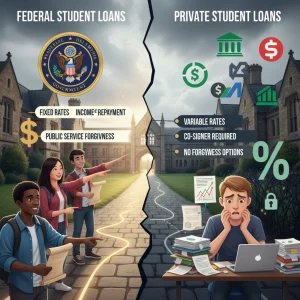
Understanding the nuances of federal student aid is a critical step for anyone pursuing higher education. As we look towards 2026, the landscape of financial aid, while relatively stable in its core offerings, continues to evolve in terms of best practices for students. Among the most common and significant forms of federal assistance are Direct Subsidized Loans and Direct Unsubsidized Loans. For many students and their families, distinguishing between these two can be a complex task, yet it’s absolutely essential for making informed financial decisions that will impact years, if not decades, after graduation. This comprehensive guide aims to demystify these options, providing a clear roadmap for students navigating their financial aid choices for the 2026 academic year and beyond. We will delve into the fundamental differences, eligibility requirements, interest accrual mechanisms, and repayment implications of each loan type, helping you to make the right choice for your unique educational journey and financial future.
Anúncios
The decision to take on student loans is not one to be made lightly. It involves a careful consideration of your present financial situation, your future earning potential, and your comfort level with debt. Federal student loans, specifically Direct Subsidized and Unsubsidized Loans, offer distinct advantages over private loans, primarily due to their borrower-friendly terms, such as fixed interest rates, income-driven repayment plans, and opportunities for deferment and forbearance. However, even within the federal loan system, there are critical distinctions that can significantly impact the total cost of your education. By understanding these differences now, you can strategically plan your borrowing to minimize long-term debt and maximize your financial well-being after graduation. Let’s embark on this detailed exploration to equip you with the knowledge needed to make the smartest choices for your academic funding.
Understanding Direct Subsidized Loans: A Closer Look
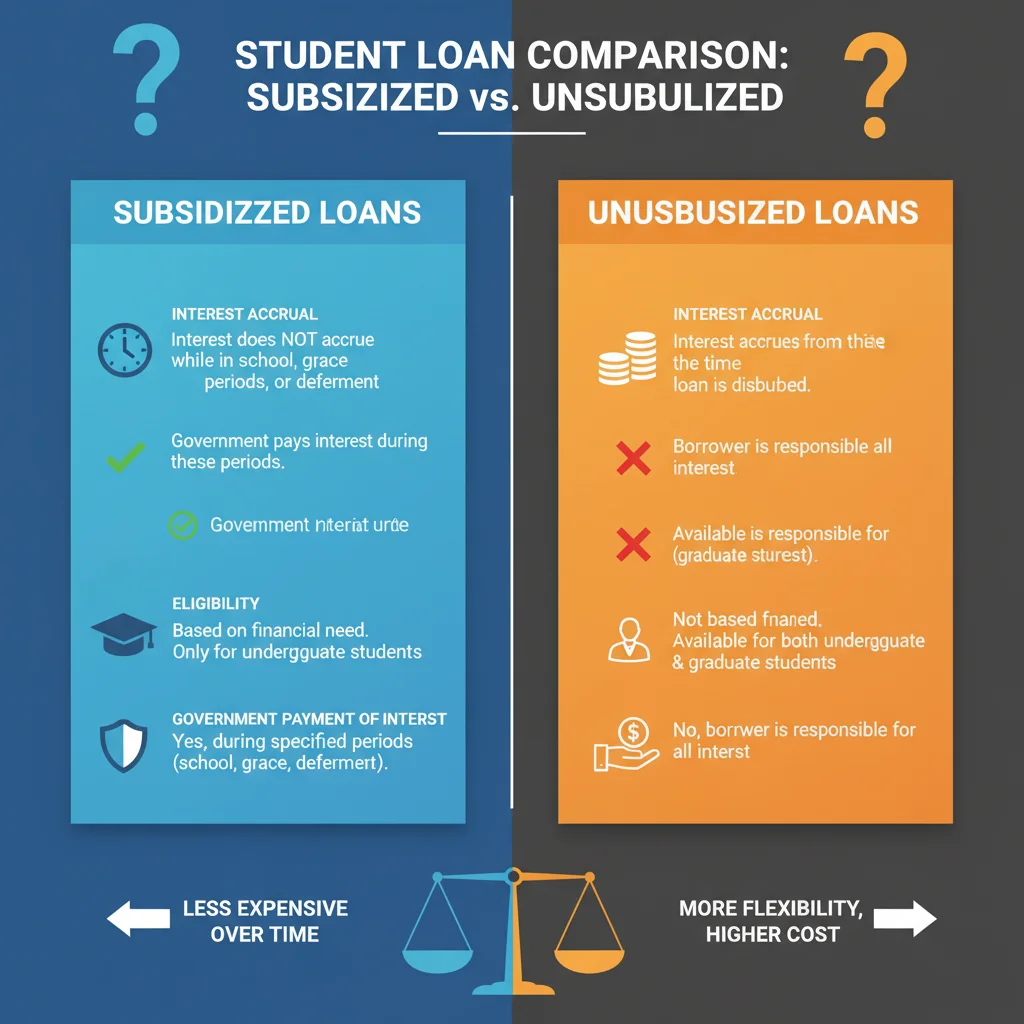
Direct Subsidized Loans are often considered the most advantageous federal student loan option for eligible undergraduates. The defining characteristic of these loans lies in the ‘subsidy’ provided by the U.S. Department of Education. This subsidy means that the government pays the interest on the loan:
Anúncios
- While you are enrolled in school at least half-time.
- During your grace period (the six months after you leave school before repayment begins).
- During periods of deferment (a temporary postponement of loan payments).
This government-paid interest is a significant benefit because it prevents your loan balance from growing while you are in school or during other eligible periods. This directly translates to a lower overall cost of borrowing compared to loans where interest accrues from the moment of disbursement. For example, if you borrow $10,000 in a Direct Subsidized Loan and attend school for four years, your loan balance will remain $10,000 when you enter repayment, assuming no other changes. This is a powerful advantage for students facing financial hardship.
Eligibility for Direct Subsidized Loans
Eligibility for Direct Subsidized Loans is strictly tied to financial need. To qualify, you must:
- Be an undergraduate student.
- Demonstrate financial need, as determined by your Free Application for Federal Student Aid (FAFSA). The FAFSA calculates your Expected Family Contribution (EFC) and subtracts it from the cost of attendance (COA) at your chosen institution.
- Be enrolled at least half-time at an eligible school.
The amount you can borrow each year is limited and varies depending on your year in school and your dependency status. For instance, for the 2026 academic year, a dependent freshman might be eligible for up to $3,500, a sophomore up to $4,500, and a junior or senior up to $5,500, with a lifetime aggregate limit. It’s important to remember that the actual amount you receive will also be capped by your demonstrated financial need and the cost of attendance at your school. Therefore, even if you meet the maximum annual limit, your school’s financial aid office will determine the precise amount you are eligible to receive based on your specific circumstances. This focus on financial need ensures that these highly beneficial loans are directed towards students who need them most to access higher education.
Dissecting Direct Unsubsidized Loans: What You Need to Know
In contrast to their subsidized counterparts, Direct Unsubsidized Loans are available to both undergraduate and graduate students, and they are not based on financial need. The key distinction, and the primary factor students must understand for 2026, is how interest accrues. With Direct Unsubsidized Loans, interest begins to accrue immediately after the loan is disbursed, even while you are in school, during your grace period, and during periods of deferment or forbearance. This means that if you choose not to pay the interest while it’s accruing, it will be capitalized, or added to your principal balance, at the end of these periods. When interest capitalizes, your loan balance grows, and future interest is calculated on that larger amount, leading to a higher total cost of the loan over time.
Interest Accrual and Capitalization
Let’s illustrate the impact of interest accrual and capitalization. Suppose you borrow $10,000 in an unsubsidized loan with a 5% interest rate. After four years of schooling and a six-month grace period (4.5 years total), if you haven’t paid any interest, approximately $2,250 in interest would have accrued. If this interest is capitalized, your new principal balance would be $12,250, and your repayment would begin on this higher amount. This is a critical point of difference when comparing Direct Subsidized vs. Unsubsidized Loans, as it can significantly increase your overall debt burden. Students have the option to pay the interest as it accrues, which can save a substantial amount over the life of the loan, but this requires making payments while still in school or during your grace period.
Eligibility for Direct Unsubsidized Loans
The eligibility criteria for Direct Unsubsidized Loans are broader than for subsidized loans:
- You must be an undergraduate or graduate/professional student.
- Financial need is not a requirement; eligibility is not based on your FAFSA’s EFC.
- You must be enrolled at least half-time at an eligible school.
The annual and aggregate loan limits for Direct Unsubsidized Loans are generally higher than for subsidized loans, especially for independent students and graduate students. For example, for the 2026 academic year, a dependent undergraduate might borrow up to an additional $2,000 beyond their subsidized loan eligibility, while independent undergraduates and graduate students can borrow substantially more, reaching up to $20,500 annually. The aggregate limits are also higher, reflecting the broader availability of these loans to a wider range of students. While these higher limits can be beneficial for covering educational costs, they also underscore the importance of borrowing only what you truly need to minimize future debt.
Key Differences: Subsidized vs. Unsubsidized Loans for 2026
To summarize and highlight the critical distinctions, let’s break down the three main differences between Direct Subsidized and Unsubsidized Loans for the 2026 academic year. Understanding these points is paramount for making an informed borrowing decision.
1. Financial Need Requirement
The most fundamental difference lies in the requirement for financial need. Direct Subsidized Loans are exclusively for undergraduate students who demonstrate financial need. This need is determined by the information provided on your FAFSA. The government essentially targets these loans to students who might otherwise struggle to afford college. In contrast, Direct Unsubsidized Loans are available to all eligible undergraduate and graduate students, regardless of their financial need. This means even high-income families or students who don’t qualify for other forms of need-based aid can still access unsubsidized loans to help cover educational expenses. This distinction often dictates which loan type a student is initially offered by their financial aid office.
2. Interest Accrual and Payment
This is arguably the most impactful difference in terms of the total cost of your loan. For Direct Subsidized Loans, the U.S. Department of Education pays the interest while you are in school (at least half-time), during your grace period, and during periods of deferment. This means your loan balance does not grow during these periods. You only start accruing and paying interest once you enter repayment. For Direct Unsubsidized Loans, interest begins to accrue immediately after the loan is disbursed. This interest accrues while you are in school, during your grace period, and during any deferment or forbearance periods. If you don’t pay this accruing interest, it will be capitalized (added to your principal balance) at certain points, such as when you enter repayment. This capitalization increases your principal balance, leading to more interest accumulating over the life of the loan and a higher total amount repaid. For students looking to minimize their long-term debt, understanding this difference is crucial. Paying the interest on unsubsidized loans while in school, even small amounts, can save a significant sum over time.
3. Annual and Aggregate Loan Limits
While both loan types have limits, they differ based on the student’s dependency status and academic level. Direct Subsidized Loans have lower annual and aggregate limits, reflecting their need-based nature and the government’s investment in reducing interest burdens for specific students. For example, a dependent undergraduate’s aggregate limit for subsidized loans is typically $23,000. Direct Unsubsidized Loans generally have higher annual and aggregate limits. This is particularly true for independent undergraduates and graduate students, who often have higher borrowing needs and fewer other federal aid options. For instance, a graduate student can borrow up to $20,500 annually in unsubsidized loans, with an aggregate limit of $138,500 (which includes any undergraduate subsidized and unsubsidized loans). These differing limits mean that students who qualify for subsidized loans will likely be offered a combination of both subsidized and unsubsidized loans to meet their full financial aid package, depending on their demonstrated need and cost of attendance.
Strategic Borrowing for 2026: Making the Right Choice
Choosing between or combining Direct Subsidized and Unsubsidized Loans requires a strategic approach. Your goal should always be to minimize your overall borrowing and, consequently, your total repayment amount. Here’s how to approach it for the 2026 academic year:
Prioritize Subsidized Loans First
If you are eligible for Direct Subsidized Loans, always accept them first. Due to the government paying the interest during key periods, these loans are the cheapest form of federal student aid. Max out your subsidized loan eligibility before considering any unsubsidized options. This is a no-brainer for any student demonstrating financial need, as it significantly reduces the cost of borrowing.
Consider Unsubsidized Loans if Necessary
Once you’ve exhausted your subsidized loan options, or if you don’t qualify for them, Direct Unsubsidized Loans can fill the remaining gap in your financial aid. However, it’s crucial to only borrow what you absolutely need. Create a detailed budget for your tuition, fees, housing, books, and living expenses. Borrow only enough to cover the necessities, avoiding the temptation to borrow more than required. Remember, every dollar borrowed in an unsubsidized loan will accrue interest from day one.
Paying Interest on Unsubsidized Loans While in School
One of the most effective strategies to mitigate the cost of Direct Unsubsidized Loans is to pay the accruing interest while you are still in school. Even small, consistent payments can prevent capitalization and significantly reduce your total repayment amount. For instance, if you have a part-time job or receive gifts, consider allocating a portion of that income to cover the monthly interest on your unsubsidized loans. Many loan servicers offer convenient ways to make these interest-only payments. This proactive approach can save you thousands of dollars over the life of your loan, making your post-graduation financial situation much more manageable.
Budgeting and Financial Planning
Effective budgeting is the cornerstone of responsible student loan borrowing. Before accepting any loan offers, sit down and create a comprehensive financial plan. This includes:
- Estimating all educational costs: Beyond tuition and fees, consider books, supplies, transportation, personal expenses, and health insurance.
- Identifying all sources of aid: Include scholarships, grants, work-study, and parental contributions.
- Calculating the gap: Determine the difference between your costs and your aid/contributions. This gap is what you might need to cover with loans.
- Exploring cost-saving measures: Can you live at home? Choose a more affordable meal plan? Work a part-time job? Every dollar you save is a dollar you don’t have to borrow.
By meticulously planning, you can ensure that you only borrow the minimum necessary to achieve your educational goals, leaving you in a stronger financial position post-graduation. This proactive approach to your finances is key to managing your Student Loan Comparison effectively.
The Application Process for 2026
The gateway to both Direct Subsidized and Unsubsidized Loans is the Free Application for Federal Student Aid (FAFSA). For the 2026-2027 academic year, the FAFSA typically opens on October 1st of the preceding year (October 1, 2025). It is crucial to complete the FAFSA as early as possible after it opens, as some aid is awarded on a first-come, first-served basis, and states and individual institutions often have their own priority deadlines. Even though federal loans are generally available throughout the year, meeting these early deadlines can maximize your overall financial aid package, including grants and scholarships.
FAFSA Completion Tips
- Gather necessary documents: This includes your (and your parents’, if dependent) tax returns, W-2s, bank statements, and records of investments and untaxed income.
- Use the IRS Data Retrieval Tool (DRT): This tool allows you to securely transfer your tax information directly from the IRS to your FAFSA, reducing errors and saving time.
- Review carefully: Double-check all information before submitting to avoid delays in processing.
- List all potential schools: Include every school you are considering, as your FAFSA information will be sent to each.
- Understand your Student Aid Report (SAR): After submitting, you’ll receive an SAR summarizing your FAFSA data. Review it for accuracy and make corrections if needed.
Once your FAFSA is processed and sent to your chosen schools, their financial aid offices will assemble an aid package for you. This package will detail your eligibility for grants, scholarships, work-study, and federal student loans, including both Direct Subsidized and Unsubsidized options. You will then have the opportunity to accept or decline parts of this package. Remember to only accept the loans you truly need.
Repayment Options and Strategies
Both Direct Subsidized and Unsubsidized Loans offer a variety of repayment plans designed to accommodate different financial situations. Understanding these options is vital for long-term financial health.
Standard Repayment Plan
This is the default plan, where you pay a fixed amount each month for up to 10 years. It typically results in the lowest total interest paid over the life of the loan.
Graduated Repayment Plan
Payments start low and increase every two years. This plan is designed for borrowers whose incomes are expected to rise over time, but you’ll pay more interest overall than with the Standard Plan.
Extended Repayment Plan
For borrowers with more than $30,000 in Direct Loans, this plan allows payments over up to 25 years, resulting in lower monthly payments but significantly more interest paid over the life of the loan.
Income-Driven Repayment (IDR) Plans
These plans (such as PAYE, REPAYE, IBR, ICR) base your monthly payment on your income and family size. Payments can be as low as $0, and any remaining balance after 20 or 25 years (depending on the plan and loan type) may be forgiven. While IDR plans offer flexibility and a safety net, they can also lead to higher total interest paid and potential tax implications on forgiven amounts. These plans are particularly useful for those entering lower-paying fields or experiencing financial hardship. Forgiveness under IDR plans is a powerful benefit, but it’s important to understand the terms and potential tax liability.
Public Service Loan Forgiveness (PSLF)
If you work full-time for a qualifying government or non-profit organization, you may be eligible for PSLF. This program forgives the remaining balance on your Direct Loans after you’ve made 120 qualifying monthly payments under a qualifying repayment plan (typically an IDR plan). This is a significant benefit for individuals committed to public service and can make a substantial difference in their financial future.
The Long-Term Impact of Your Loan Choices
The choices you make regarding Direct Subsidized vs. Unsubsidized Loans today will have a lasting impact on your financial future. Borrowing wisely means understanding not just the immediate benefits of funding your education, but also the long-term implications of debt.
Debt-to-Income Ratio
Your student loan debt will contribute to your debt-to-income ratio, which lenders consider when you apply for mortgages, car loans, or other forms of credit. A high debt-to-income ratio can limit your borrowing power in the future.
Financial Flexibility
Lower student loan payments provide more financial flexibility after graduation, allowing you to save for a down payment on a home, invest for retirement, or pursue other financial goals. Conversely, high payments can strain your budget and delay these milestones.
Career Choices
For some, significant student loan debt can influence career choices, pushing individuals towards higher-paying jobs to manage payments, even if those roles aren’t their first preference. Minimizing debt can offer more freedom to pursue passions or careers in public service without the immense pressure of large monthly loan obligations.
By carefully considering your Student Loan Comparison options for 2026, prioritizing subsidized loans, borrowing only what’s necessary, and understanding repayment strategies, you can lay a strong foundation for a healthier financial future. The goal is to invest in your education without incurring an unsustainable debt burden.

Conclusion: Your Empowered Decision for 2026
Navigating the world of student loans can seem daunting, but armed with the right information, you are empowered to make choices that will serve your best interests. For the 2026 academic year, the distinction between Direct Subsidized and Unsubsidized Loans remains a cornerstone of federal financial aid. Remembering that subsidized loans are need-based and accrue no interest while you’re in school, during your grace period, or during deferment, makes them the superior option if you qualify. Unsubsidized loans, available to all eligible students regardless of need, begin accruing interest immediately, potentially leading to a higher overall cost if that interest is not paid down as it accrues.
The key takeaway is to always prioritize Direct Subsidized Loans first, accept only the necessary amount of Direct Unsubsidized Loans, and consider paying the interest on unsubsidized loans while you are still in school to minimize capitalization. Furthermore, proactive financial planning, diligent FAFSA completion, and an understanding of the available repayment options are all crucial components of a successful student loan strategy. Your education is an invaluable investment, and by making informed decisions about your federal student loans, you can ensure that this investment pays dividends for years to come without becoming an overwhelming financial burden. Take the time to evaluate your needs, understand the terms, and plan for your future. Your financial well-being after graduation starts with the choices you make today regarding your Student Loan Comparison.